India’s Ultimate Car & Bike News Hub

Cars

buying a car or bike in India
Bikes, Cars, News, Reviews, Safety, Special Report, Uncategorized

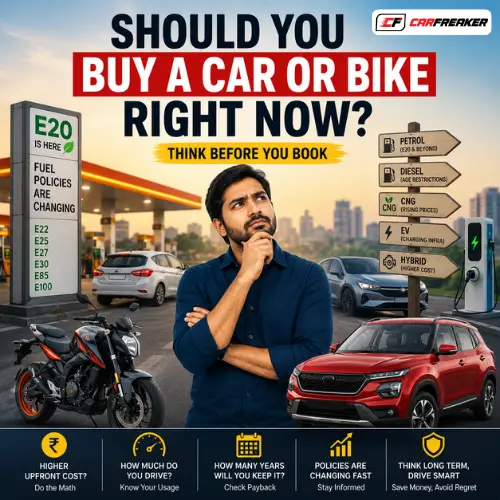
Should You Hold Off Buying a New Car or Bike Right Now? Here’s the Honest Carfreaker Take

Every second day someone messages us on the consultant form asking the same thing – “bhai which car should I buy” or “is this bike worth it.” And most of the time we jump straight to comparing features, mileage, price. But lately we’ve been sitting on a bigger question that honestly nobody is talking about enough: should you even be buying right now? We know how that sounds coming from an auto site. Usually we’re the guys pushing you toward a showroom. But this time we genuinely think a lot of buyers – especially middle class families here in Gujarat and across India – need to slow down for a bit and actually understand what’s happening with fuel and vehicle policy before they sign that booking form. Not because we don’t want you to buy a vehicle, but because we want you to buy the right one, at the right time, without regretting it two years down the line. Here’s why. Petrol Isn’t What It Used to Be, and Nobody Really Knows What’s Next If you’ve filled petrol recently you’ve probably noticed it’s all E20 now – that’s petrol mixed with 20% ethanol. India hit this target in 2025, years ahead of schedule, and by April 2026 it became the standard at pumps across the country, not just in a few states. Now on paper this sounds fine – cleaner fuel, less crude import dependency, more support for farmers growing sugarcane and maize. All good things. But here’s the part that doesn’t get talked about enough: the government’s own roadmap only commits to E20 till October 31, 2026. What happens after that is still under review. There’s already a committee report pending, standards have been notified for even higher blends like E22, E25, E27 and E30, and there’s serious talk about E85 and E100 flex-fuel vehicles too. So basically, if you buy a regular petrol vehicle today, you genuinely don’t know what blend you’ll be filling into that tank two or three years from now. Older engines not built for higher ethanol content can see real issues – reduced mileage, corrosion in fuel lines, rubber components wearing out faster. Some owners have already been vocal about this, enough that it reached the Supreme Court and the ministry had to put out clarifications. That tells you it’s not a small, made-up concern. Point is – the fuel your vehicle runs on isn’t fixed anymore. It’s a moving target, and moving targets are risky when you’re taking a 5-7 year loan on a vehicle. Diesel Has Its Own Expiry Date, Literally If diesel is on your mind, especially for an SUV, there’s something you need to know before you commit lakhs of rupees. In Delhi-NCR, diesel vehicles older than 10 years and petrol vehicles older than 15 years have effectively been getting cut off from fuel stations under CAQM orders, and this whole issue has been going back and forth in the Supreme Court through 2025 and into 2026. Right now there’s some relief for existing owners, but the direction is pretty clear – cities are actively working to phase out older diesel vehicles, and other major metros are watching Delhi’s playbook closely. What this means practically – if you buy a diesel car today thinking you’ll run it for 12-15 years like people used to, that plan might not hold up, at least not in bigger cities. You could be looking at a vehicle that becomes unusable or worth very little well before you’ve finished paying it off, let alone gotten your money’s worth from it. EVs Sound Great, Until You’re Actually Charging One Outside a Metro We’re not against EVs, in fact we’ve covered quite a few – the e-Vitara, the BE.6E, Harrier EV – and the technology itself is genuinely impressive now. But let’s be real about infrastructure. Outside Ahmedabad, Surat, Vadodara and a handful of big cities, finding a working, fast public charger is still a gamble. Highway charging on long routes is improving but still patchy. If your daily use is strictly within city limits and you have space for home charging, sure, an EV can work beautifully. But if you’re someone who does long weekend drives to native place or travels between cities often, you need to go in with eyes open, not just because the showroom guy showed you a nice range number on a brochure. CNG Isn’t the “Cheap Fuel” It Used to Be Either A lot of buyers switch to CNG purely for the running cost. Fair enough, it used to be a big gap compared to petrol. But if you check the numbers, CNG rates have been climbing steadily over the last year in most cities – Delhi, Mumbai, Bangalore, Chennai, Kolkata have all seen hikes through 2025 into 2026, some cities more sharply than others depending on local taxes and gas allocation. It’s still cheaper than petrol per km, no doubt, but the gap that made CNG a no-brainer a few years back has been shrinking, and that changes your payback math on the extra cost of the CNG kit or variant. The Upfront Price Gap Nobody Explains Properly Here’s something we tell every single person who fills our consultant form, and honestly it deserves its own section because most showroom salespeople gloss over it. Take any popular hatchback or compact SUV and check the petrol variant price. Now check the CNG variant of the exact same car. In the current market that gap is close to ₹1 lakh, sometimes a little less, sometimes a little more depending on the model. That’s money you’re paying upfront, on day one, before you’ve driven a single kilometre. Now the whole logic of going CNG is that you recover this extra lakh through cheaper running cost. And that math does work – but only if your usage is genuinely high. If you’re doing decent daily kilometres, you can claw back that ₹1 lakh in about 2-3 years. But if your car mostly sits

Tata vs Mahindra EV
Cars, Reviews, Special Report, Uncategorized

⚡ Tata vs Mahindra: EV Battle Explained (Real Ground Reality)

India’s EV market is growing fast, and the Tata vs Mahindra EV battle is becoming one of the most talked-about topics right now 🔥. Both Tata Motors and Mahindra & Mahindra are pushing aggressively into electric vehicles, but their strategy and approach are quite different — thoda alag soch hai dono ka. In this article, we will break down the real ground reality — aaj kaun aage hai aur future me kaun lead karega, everything explained in simple terms. 🚗 Who actually started early? If we talk straight — Tata understood the EV game early On the other hand… Mahindra was there… but not fully serious that time 👉 So yeah, Tata got the early advantage here. 🔋 Current lineup — what’s happening right now? ⚡ Tata’s strategy (mass market focus) 👉 Simple goal: more and more people can actually afford EVs ⚡ Mahindra’s strategy (premium + future ready) 👉 Focus is clear — design, performance, and thoda “next-gen” feel 📊 Current scene: 🧠 Technology — who is doing better? This is where things get interesting… Tata: Mahindra: 👉 So for future — Mahindra might have an edge here. 💰 Pricing — the real Indian factor Let’s be honest… price matters a lot in India. 👉 And yaha clearly Tata wins, because value-for-money is still king. 🔌 Charging & ecosystem One big reason why Tata is winning right now: Mahindra is still building this side of things. 👉 So currently — Tata has the stronger ecosystem. 🚀 So, who is actually winning? 🌍 And what about MG & Hyundai? Now this is where many people forget — competition sirf in dono ka nahi hai. 👉 MG Motor India 👉 Hyundai Motor India 🔥 Final Thoughts (simple and clear) 👉 End of the day, EV market ab full race me aa chuka hai in India And honestly…next 2–3 years are going to be very interesting — asli competition tab dikhega 😎

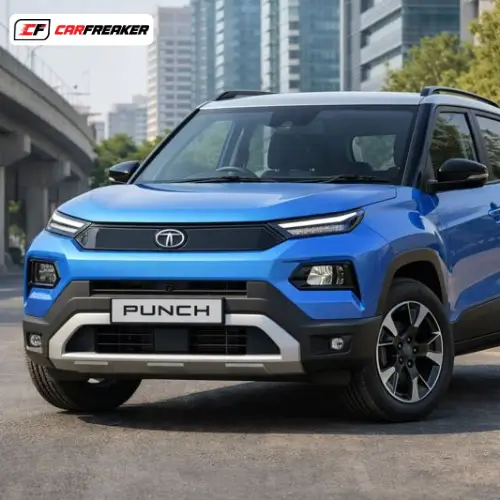
Tata Punch 2026 compact SUV front three-quarter view on an Indian city road
Cars, News

All New Tata Punch 2026 – Price, Features, Mileage, Safety & Comparison

Introduction: Why Tata Punch Still Makes Sense in India If you look around Indian roads today, especially in cities and growing towns, one thing is very clear — the Tata Punch 2026 is already creating a lot of buzz. From young first-time car buyers to small families upgrading from a bike or old hatchback, the Punch has quietly become one of Tata’s most successful and trusted cars in India. At CarFreaker, we regularly track what Indian buyers are actually choosing, and Punch consistently comes up as a practical favourite. The reason is simple. It looks like a small SUV, feels solid, gives decent mileage, and most importantly, it carries the Tata badge for safety. Now with the Tata Punch 2026 model expected soon, there’s a lot of buzz. Readers at CarFreaker are already asking — What’s new? Will the price go up? Is it still better than Hyundai Exter? Let’s break it down honestly. Tata Punch 2026 Price in India Price is always the first concern for Indian buyers, and Tata knows this very well. From what CarFreaker has observed through market trends and Tata’s recent launches, the company will try hard to keep Punch within reach of middle-class families. Expected Ex-Showroom Price (India) This expected Tata Punch 2026 price in India keeps it competitive with Hyundai Exter, Citroen C3, and even higher variants of WagonR. Tata Punch 2026 On-Road Price Ahmedabad (Example) For buyers in Gujarat, especially Ahmedabad, here’s a realistic estimate based on current RTO and insurance costs that CarFreaker tracks regularly: So if you’re searching for Tata Punch 2026 on-road price Ahmedabad, this is a safe expectation. Tata Punch 2026 Mileage & Engine Mileage is non-negotiable for most Indian households. At CarFreaker, we always focus on real-world figures, not brochure numbers. Engine Details (Expected) Tata is sticking to this engine because it’s proven, reliable, and affordable to maintain — exactly what Indian buyers prefer. Tata Punch 2026 Mileage (Real-World) For daily office runs, school drops, traffic-heavy roads, and occasional highway trips, the Tata Punch 2026 mileage is practical and predictable. Features & Interior Updates Based on Tata’s recent updates across models like Nexon and Altroz, CarFreaker expects the Punch 2026 to get meaningful feature upgrades rather than gimmicks. Expected Feature List The interior will still focus more on durability than luxury. Hard plastics remain, but the layout is user-friendly, especially for new drivers and family users. Safety & Build Quality This is where Tata clearly stands apart — and why CarFreaker often recommends Tata cars to safety-focused buyers. Tata Punch 2026 Safety Rating (Expected) If safety is your top priority, the Tata Punch 2026 safety rating alone makes it a serious option. Tata Punch 2026 vs Hyundai Exter This is one comparison CarFreaker readers ask about almost every week. Comparison Table: Tata Punch 2026 vs Hyundai Exter Factor Tata Punch 2026 Hyundai Exter Starting Price More affordable Slightly higher Mileage 18–21 km/l 19–22 km/l Safety 5-star (expected) Not crash-tested Build Feel Solid & strong Light Engine Nature Calm, practical More refined Family Confidence High Medium CarFreaker Take on This Comparison If safety, durability, and peace of mind matter more, Tata Punch 2026 wins.If you want a smoother engine and feature-loaded cabin, Exter feels tempting. But for Indian families, Punch still feels more trustworthy. Is Tata Punch 2026 Good for Middle-Class Buyers? From CarFreaker’s perspective — absolutely yes. Tata Punch 2026 EMI Options for Middle-Class Buyers With a down payment of around ₹1–1.2 lakh: This makes the Tata Punch 2026 EMI options for middle-class buyers very manageable. Maintenance & Ownership Family Suitability So if you’re wondering Is Tata Punch 2026 good for family? — it clearly ticks most boxes. Pros & Cons Pros Cons As CarFreaker always says — no car is perfect, but Punch keeps its priorities right. FAQs – Tata Punch 2026 What is the mileage of Tata Punch 2026? In real-world conditions, expect 18–19 km/l in city and 20–21 km/l on highways. Is Tata Punch 2026 better than Hyundai Exter? For safety and build quality, yes. For smoother driving and features, Exter may appeal more. Is Tata Punch 2026 good for family use? Yes. It’s safe, comfortable, easy to drive, and affordable to own. What is the on-road price of Tata Punch 2026 in Ahmedabad? Expected between ₹7.1 lakh and ₹10.2 lakh, depending on the variant. Final Verdict: Should You Buy Tata Punch 2026? From CarFreaker’s honest point of view, the Tata Punch 2026 continues to be one of the smartest choices for Indian buyers who want safety, practicality, and peace of mind. Who Should Buy It? It may not excite you with speed or flashy interiors, but it delivers where it matters. If Tata prices it well and adds the expected updates, Tata Punch 2026 will remain a solid, sensible, and dependable car for Indian roads. If you’re also interested in how Tata cars are performing in the Indian market overall, it’s worth checking out how the brand is creating waves again with its iconic nameplate. Tata recently grabbed attention with massive demand for its upcoming SUV, and you can read more about it here: Tata Sierra booking numbers create record demand in India. If you enjoy honest car discussions and real buyer opinions, you can also follow CarFreaker on LinkedIn for regular auto updates and industry insights. For open conversations, opinions, and community-driven discussions around Indian cars, you can join the CarFreaker subreddit on Reddit, where enthusiasts share real-world experiences and thoughts.

Kia Seltos 2026 price
Cars, News

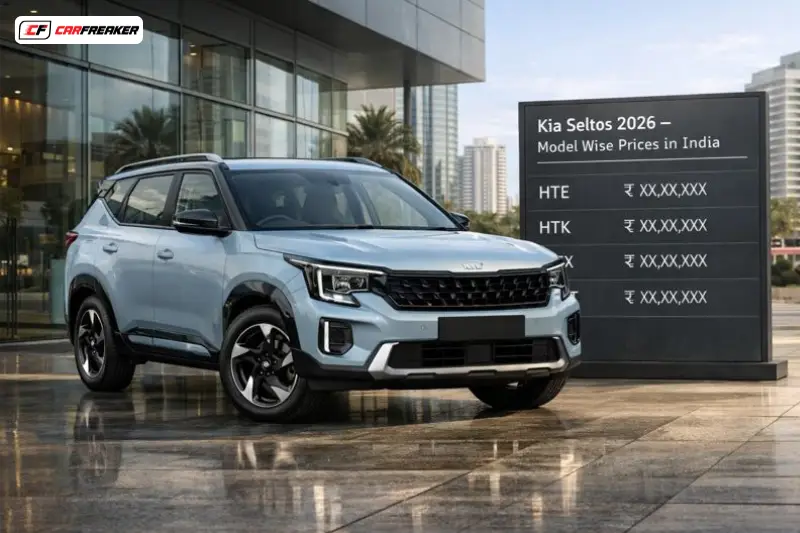
All New Kia Seltos 2026 Price Model Wise List in India

Variants, Petrol & Diesel Options, Features Explained + Best Value Picks The Kia Seltos has always been one of those SUV that Indians love for getting almost everything right looks, features, engine choices, and road presence. With the 2026 update, Kia is expected to fine tune the formula further, adding smarter tech, improved safety, and slightly revised pricing across variants. If you’re planning to buy the Kia Seltos 2026 price, this guide breaks down model wise prices, petrol and diesel options, manual and automatic variants, and what each trim actually offers and it also without confusing jargon. Kia Seltos 2026 – Expected Engine Options Before diving into prices, here’s a quick look at what Kia is expected to continue with: All-New Kia Seltos 2026 Price List (Expected Ex-Showroom India) Variant Engine Transmission Expected Price (₹) HTE 1.5 Petrol Manual 11.20 lakh HTK 1.5 Petrol Manual 12.00 lakh HTK+ 1.5 Petrol Manual 12.90 lakh HTX 1.5 Petrol Manual 14.20 lakh HTX CVT 1.5 Petrol Automatic (CVT) 15.50 lakh HTX+ 1.5 Petrol Manual 15.90 lakh GTX+ Turbo 1.5 Turbo Petrol 7DCT 19.50 lakh X-Line Turbo 1.5 Turbo Petrol 7DCT 20.00 lakh HTK Diesel 1.5 Diesel Manual 13.50 lakh HTX Diesel 1.5 Diesel Manual 15.50 lakh HTX Diesel AT 1.5 Diesel 6AT 17.20 lakh GTX+ Diesel 1.5 Diesel Automatic 18.80 lakh Note: Prices are expected ex-showroom and may change at launch. Variant-Wise Features Breakdown (What You Actually Get) HTE & HTK – Entry Level but Practical HTK+ – The Real Sweet Spot Begins This is where Seltos starts feeling “premium”. HTX & HTX CVT – Balanced Family Choice HTX+ – Feature Loaded Without Going Sporty GTX+ Turbo – Performance Meets Luxury This one is for enthusiasts who want speed + features. X-Line – For Those Who Want Exclusivity Diesel Variants – Highway Kings Mileage Expectations (Real World) Verdict: Top 2 Value-for-Money Kia Seltos 2026 Variants 🥇 HTK+ Petrol Manual Why buy? Perfect for: First-time SUV buyers, families 🥈 HTX Diesel Manual Why buy? Perfect for -> this is way comfortable and fuel efficient for Highway users and long-distance commuters Final Thoughts The All-New Kia Seltos 2026 continues to play on its biggest strength — choice. Whether you want efficiency, performance, comfort, or tech, there’s a Seltos variant that fits your budget and lifestyle. The key is picking the right trim, not the most expensive one. If you’re shopping smart, the Seltos still remains one of the safest bets in the mid-size SUV segment.

Best Selling Cars in India 2025
Cars, Reviews, Special Report

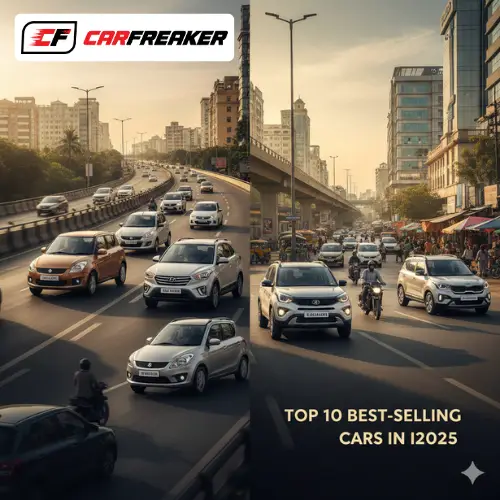
Top 10 Best Selling Cars in India in 2025 and What Indians Really Bought

Every year, we talk about launches, features, horsepower and technology. But when the dust settles and the sales numbers come out, a very different picture appears. This Best Selling Cars in India 2025 that dominate India are rarely the ones that excite enthusiasts. They are the ones that quietly fit into everyday life. 2025 was no different. If you look closely at the best selling cars this year, you will notice a pattern. Indians are not buying dreams. They are buying solutions. Solutions to traffic, fuel prices, bad roads, family needs and long term ownership stress. Here is what is India Best Selling Cars in India 2025, and why. Maruti Suzuki Wagon R Around 2.05 lakh units sold in 2025Average yearly service cost roughly ₹4,000 to ₹5,000 The Wagon R does not need defending anymore. It has outlived trends, criticism and even common sense arguments. People buy it because it works. Elderly parents can get in easily. Kids have space. Mileage is predictable. Service centres are everywhere. The biggest complaint people have is also its biggest truth. It feels basic. But for buyers, basic often means dependable. This car sells because it removes fear from car ownership. Maruti Suzuki Baleno Around 1.85 lakh units sold in 2025Average yearly service cost roughly ₹5,000 to ₹6,000 The Baleno is what happens when you understand the Indian middle class mindset perfectly. It feels premium enough to feel like an upgrade, but not expensive enough to feel risky. It is comfortable, quiet and easy to live with. Owners often admit one thing openly. They wish it felt stronger in build. But they still buy it because day to day comfort matters more than online debates. This is the safe premium choice. Tata Punch Around 1.75 lakh units sold in 2025Average yearly service cost roughly ₹5,500 to ₹6,500 The Punch did something unusual. It made safety a talking point in a small car segment. Parents buying a first car for their children gravitated towards it. New drivers felt confident sitting higher. On highways, the engine feels strained. Owners know this. But most Punch buyers are not chasing speed. They are chasing peace of mind. It sells because it makes people feel protected. Hyundai Creta Around 1.70 lakh units sold in 2025Average yearly service cost roughly ₹7,000 to ₹9,000 The Creta is not just a car anymore. It is a default answer. If someone asks which SUV to buy, this name comes up without thinking. It rides well, feels premium, and Hyundai knows how to make buyers feel taken care of. The only real frustration is waiting time. Demand refuses to cool down. People buy the Creta because it feels like a reward for reaching a certain stage in life. Maruti Suzuki Swift Around 1.65 lakh units sold in 2025Average yearly service cost roughly ₹4,500 to ₹5,500 The Swift still carries a spark that most hatchbacks have lost. It feels light, playful and easy. Young buyers still smile when they drive it. Rear seat space is not its strength. Families know this. Yet many still choose it because driving joy still matters to some extent. The Swift sells because it still feels alive. Maruti Suzuki Dzire Around 1.60 lakh units sold in 2025Average yearly service cost roughly ₹5,000 to ₹6,000 The Dzire does not try to impress. It tries to reassure. Rear seat comfort, boot space and calm driving manners make it a family favourite. Design is conservative and nobody denies that. But conservative is often another word for trusted. It sells because it makes long term ownership predictable. Tata Nexon Around 1.55 lakh units sold in 2025Average yearly service cost roughly ₹6,500 to ₹8,000 The Nexon attracts buyers who actively think about safety and strength. It feels solid on the road and offers multiple powertrain choices. Some owners complain about interior inconsistencies. Yet many still choose it because it feels planted and reassuring at speed. It sells because it feels built to last. Hyundai Venue Around 1.45 lakh units sold in 2025Average yearly service cost roughly ₹6,000 to ₹7,500 The Venue fits perfectly into crowded cities. Compact dimensions, feature rich cabin and refined engines make it easy to drive daily. Rear seat comfort is not its strongest suit. Buyers know this. But most Venue owners are front seat users spending hours in traffic. It sells because city life demands compact SUVs. Maruti Suzuki Ertiga Around 1.40 lakh units sold in 2025Average yearly service cost roughly ₹6,000 to ₹7,000 The Ertiga quietly carries families, luggage and businesses across India. It is not glamorous, but it is incredibly useful. Third row comfort is limited for adults, yet people keep buying it because it does not pretend to be something else. It sells because it solves real family problems. Kia Sonet Around 1.30 lakh units sold in 2025Average yearly service cost roughly ₹6,500 to ₹8,000 The Sonet speaks to buyers who want their car to feel modern. Screens, design and features attract younger owners. Ride quality can feel stiff on bad roads. But many buyers are willing to trade some comfort for style and tech. It sells because looks and features still influence decisions. What 2025 Really Tells Us Indian buyers in 2025 are practical and that’s why we are here with story of Best Selling Cars in India 2025 with its cautious and informed. They care about safety more than before. They still value mileage. They trust brands that reduce ownership anxiety. Excitement matters, but only after reliability is guaranteed. While these cars dominated Indian roads in 2025, the story of India’s car market is far from over. With changing buyer preferences, stricter emission norms, and a strong push toward electrification, the next wave of launches is already creating a buzz. From new-generation SUVs to affordable EVs and feature-packed family cars, the coming year promises plenty of excitement. If you’re curious about what’s next for Indian buyers, don’t miss our detailed look at the upcoming cars in India for 2026, where we break down the most

Upcoming cars in India 2026 including SUVs and electric vehicles
Cars, News

Upcoming Cars in India 2026: 10 Launches That Will Change Our Roads

If you think 2026 is just another new fresh and commen year on the calendar, think again. For Indian car buyers and auto enthusiasts, 2026 is shaping up to be a turning point. Brands are finally going all-in — better designs, more safety, smarter tech, and a serious push towards electric mobility. From long-awaited comebacks to futuristic EVs that actually make sense for Indian families, here are the top 10 upcoming cars in India in 2026 that truly deserve your attention — written the CarFreaker way, with passion, perspective, and zero hype-for-the-sake-of-hype. Renault Duster (New and fresh Generation): Yes, It’s Really Coming Back The Duster is not just another SUV — it’s an emotion for many Indian buyers. After years of silence, Renault is finally bringing it back, and this time it’s more modern, more premium, and far better equipped. Expect a tougher road presence, a much-improved cabin, and engines tuned for both city comfort and highway confidence. CarFreaker take: If Renault prices this right, the Duster could once again become the SUV people actually drive, not just show off. Mahindra XUV 7XO: Screens, Safety and Serious Road Presence Mahindra is on a roll, and the XUV 7XO looks like another big statement. This SUV is all about technology — multiple screens, advanced driver assistance features, and interiors that finally feel premium without trying too hard. It’s designed for buyers who want everything: space, performance, and features. CarFreaker take: Mahindra is slowly mastering the balance between tech and toughness — and that’s a good sign. Kia Seltos 2026: Playing Safe, But Playing Smart The Seltos is already one of India’s most popular SUVs, and Kia isn’t trying to reinvent the wheel here. Instead, the 2026 version focuses on refinement — more space, better safety tech, and an interior that feels closer to luxury than mass-market. CarFreaker take: This will be the “safe choice” SUV — and there’s nothing wrong with that. Hyundai Bayon: Small SUV, Big Practicality Hyundai’s Bayon is expected to sit between the Venue and Creta, targeting urban buyers who want SUV looks without SUV bulk. Think comfortable ride, premium interiors, and easy city driving. CarFreaker take: Not flashy, not aggressive — just a sensible urban SUV that many families will quietly love. Honda Electric SUV: Late, But Hopefully Worth It Honda took its time entering the EV space, but 2026 should finally see its first India-focused electric SUV. Expect solid build quality, smooth driving manners, and reliability — classic Honda traits, now in an electric package. CarFreaker take: Honda doesn’t rush things. If they’ve waited this long, expectations are naturally high. Tata Avinya: Tata’s Most Ambitious EV Yet The Avinya isn’t just another Tata EV — it’s a vision of where the brand wants to go. Futuristic design, airy interiors, and a focus on comfort and long-distance usability make it stand out from Tata’s current EV lineup. CarFreaker take: This is Tata thinking global, not just Indian — and that’s exciting. Nissan Tekton: A Fresh Attempt to Stay Relevant Nissan has struggled in India, but the Tekton could be their fresh start. Bold design, modern interiors, and a focus on performance could help Nissan regain lost ground. CarFreaker take: Nissan really needs this to work — and honestly, the idea looks promising. Volkswagen Tera: Built for Drivers, Not Just Buyers Volkswagen’s strength has always been build quality and driving feel. The upcoming Tera SUV is expected to continue that tradition while adding modern features and strong safety credentials. CarFreaker take: If you enjoy driving more than touchscreen sizes, keep an eye on this one. Maruti Suzuki e-Vitara: The EV Moment India Was Waiting For When Maruti enters a segment, things change — and the e-Vitara could be the moment EVs go truly mainstream in India. Practical range, wide service network, and Maruti’s trust factor make this a big deal. CarFreaker take: This could be the EV your parents are actually comfortable buying. Mahindra XEV (7-Seater EV): The Big One Topping our list is Mahindra’s upcoming 7-seater electric SUV. Large, premium, long-range, and family-friendly — something India has been waiting for. CarFreaker take: If Mahindra gets the pricing right, this could redefine electric family cars in India. Final Thoughts: 2026 Feels Different What makes 2026 special isn’t just the number of launches — it’s the intent behind them. Brands are finally listening. Safer cars, smarter tech, and EVs that don’t feel experimental anymore. Whether you’re planning to buy or just love cars, 2026 is going to be fun. Stay tuned to CarFreaker — because we don’t just report launches, we live them 🚗🔥

Tata Sierra SUV creating record booking numbers in India
Cars, News

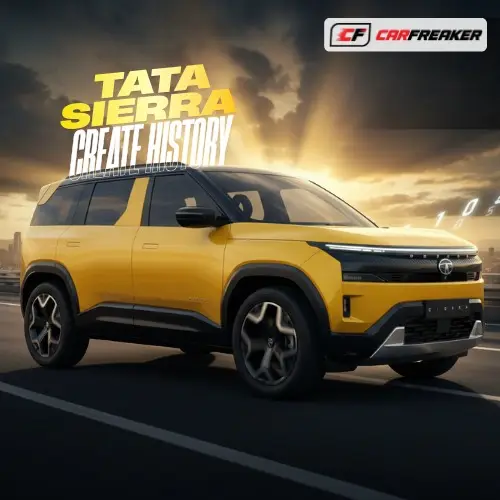
Tata Sierra Booking Numbers Create History: India’s Nostalgia SUV Is a Massive Hit

Tata Motors has done it again — and this time, it’s powered by pure nostalgia mixed with modern SUV madness. The moment Tata Sierra bookings opened, the response was nothing short of explosive. Within hours, the Sierra started shattering booking records, proving one thing loud and clear:👉 India was waiting for the Sierra to return. Let’s break down what’s happening, why the numbers matter, and what this means for Tata Motors. Tata Sierra Booking Numbers: The Big Record According to early industry data and dealer-level reports: For Tata Motors, this is not just a successful launch — it’s a statement comeback. Why Tata Sierra Is Getting Record Bookings 🧠 1. Nostalgia Factor = Massive Emotional Connect The original Tata Sierra was an icon of the 90s.This new-generation Sierra: For many buyers, it’s not just an SUV — it’s a childhood memory revived. ⚡ 2. EV + ICE Strategy Worked Perfectly Tata played a smart game: This dual approach has expanded the customer base massively, directly boosting booking numbers. 🚙 3. Strong SUV Design Language Let’s be honest — the new Sierra looks solid and premium: It stands out in a market flooded with similar-looking SUVs. 📈 4. Tata’s Growing Trust Factor Thanks to: Buyers now trust Tata Motors blindly, especially in the SUV space. Dealer Reactions: “Demand Is Way Higher Than Expected” Many Tata dealers across metro and Tier-2 cities are reporting: This kind of demand usually indicates long waiting periods ahead. What These Booking Numbers Mean for Tata Motors ✔ Strengthens Tata’s dominance in the SUV segment✔ Confirms emotional branding still works✔ Gives confidence for future retro revivals✔ Positions Sierra as a premium lifestyle SUV For Tata, Sierra is no longer just a model — it’s becoming a brand within a brand. Expected Delivery Timeline & Waiting Period Given the booking momentum: If you’re planning to buy — early booking is key. CarFreaker Verdict The Tata Sierra booking numbers clearly show one thing:India loves a good comeback story — especially when it’s done right. With killer design, smart powertrain choices, and strong emotional appeal, the Sierra has already won half the battle before deliveries even begin. This is not just a successful launch —👉 This is history in the making.

Harrier EV river crossing
Cars, News, Trending

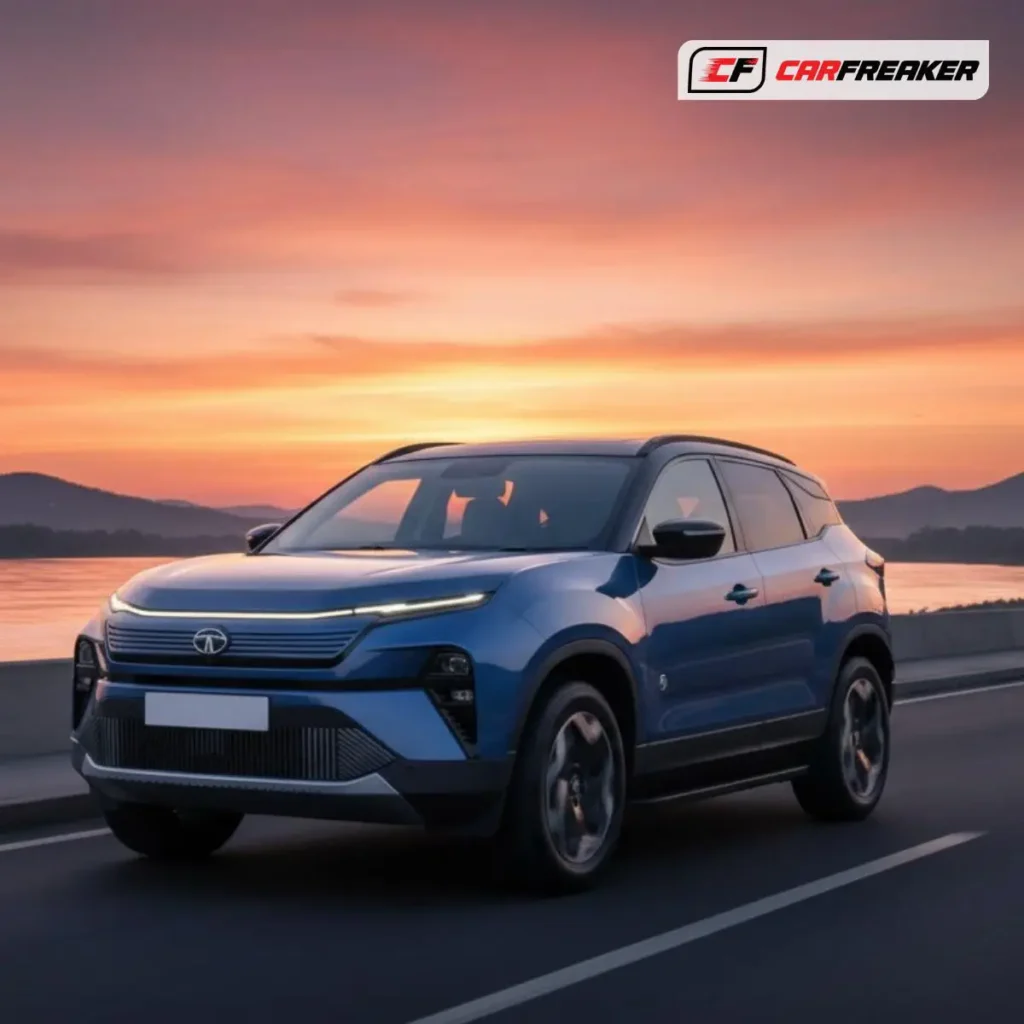
Tata Harrier EV Takes on the Red Bull River Crossing: Power Meets Precision

When you think of Tata’s electric future, you already expect bold design, instant torque, and road presence. But the Harrier EV just took things to a whole new level by pulling off something wild — a Red Bull-style river crossing challenge that tested its strength, stability, and pure EV capability. This wasn’t just a splashy promo. It was a statement. A Test Built for Beasts — Not Just EVs The terrain was unpredictable.Water flow was strong.Traction? Changing every second. But the Harrier EV, with its all-wheel drive setup, battery protection architecture, and high-ground clearance, walked (well… powered) through the river like it was just another Sunday obstacle. Key highlights of the challenge: This EV isn’t just eco-friendly. It’s adventure-friendly. Design That Stands Out Even in the Wild Under the harsh sunlight and splashing river water, the Harrier EV’s futuristic DRLs, sharp lines, and muscular stance looked even more dramatic. The closed-off grille, aero wheels, and clean body design showcased next-gen Tata DNA — rugged yet modern. If this is the future of electric SUVs in India, we’re all in. Performance That Proves a Point Many still believe EVs are only meant for smooth tarmac and city traffic.Wrong. The Harrier EV showed how EV powertrains can deliver: Red Bull challenges are known for extreme tests — and the Harrier EV passed it with style. So, What Does This Mean for Indian EVs? Simple:Electric SUVs in India aren’t just about charging and range anymore. They’re becoming adventure-ready. The Harrier EV’s performance here proves: Tata Motors clearly wants the Harrier EV to be more than a city showpiece — it wants to be a legitimate SUV you can take anywhere. Final Verdict — Harrier EV Just Raised the Bar With the Red Bull river crossing challenge, Tata didn’t just market a new EV.They showcased dominance. The Harrier EV blends: This is the kind of content India’s EV scene needs — bold, capable, and unapologetically adventurous.

Maruti e-Vitara Launch
Cars, News, Uncategorized

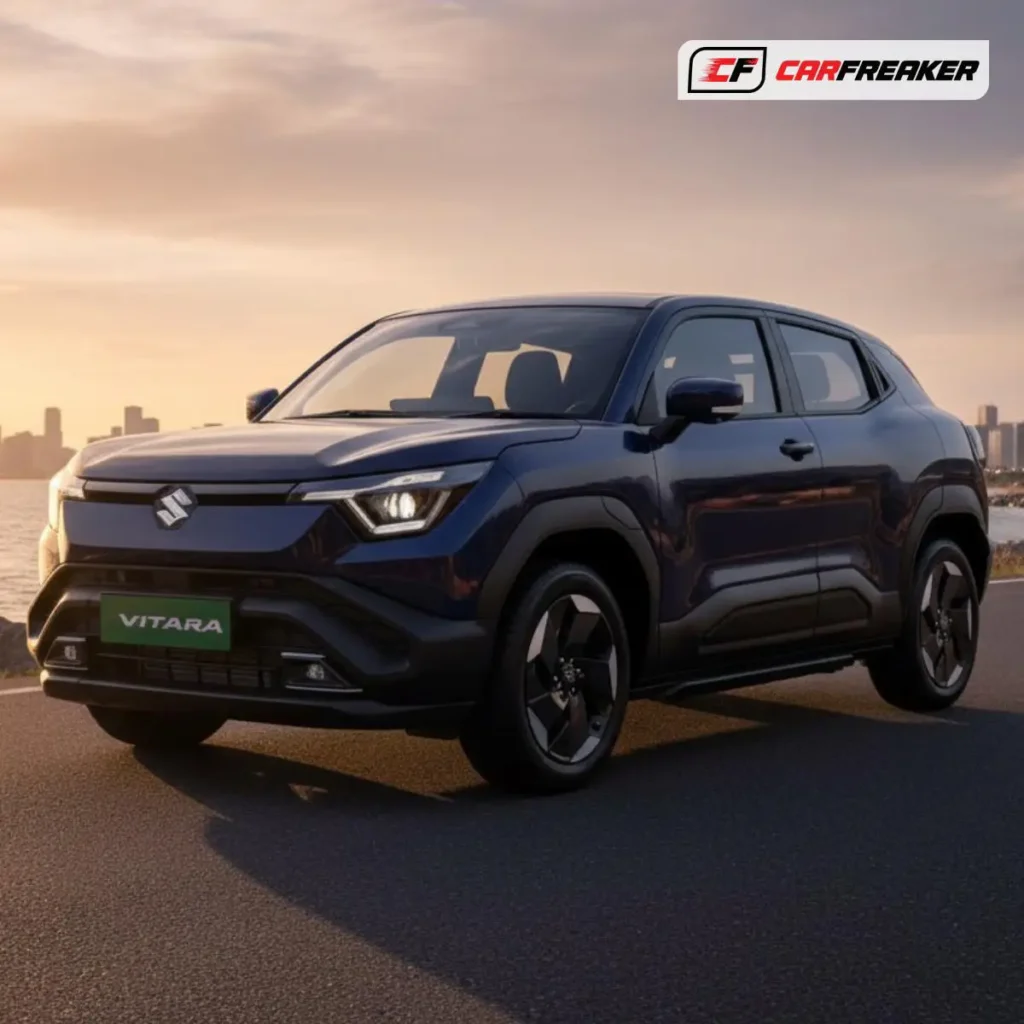
Maruti Suzuki e-Vitara India Launch: The Electric Breather India Needed?

Maruti Suzuki has finally stepped into the EV game with the all-new e-Vitara, and let’s be honest — India has been waiting for this moment for years. After dominating the ICE market for decades, Maruti is now trying to prove that it can electrify the streets just as well. But is the e-Vitara powerful enough to shake the current EV segment, or is it just another “safe play” from India’s largest carmaker? Let’s plug in and find out. ⚡ Design: Clean, Sharp & Familiar — But EV-ish The e-Vitara carries forward the SUV stance of the Grand Vitara but adds EV touches: It still looks like a Maruti — safe design, wide appeal, nothing too risky. ⚡ Battery & Performance: Finally Some Power from Maruti Expected figures: Maruti is focusing more on range efficiency, their strongest area. Not the quickest EV, but definitely aiming to be the most dependable one. ⚡ Features: Maruti Levels Up The e-Vitara packs all modern EV essentials: Maruti is finally stepping into the premium feature zone — something their EV customers definitely expect. 📊 Maruti Suzuki e-Vitara vs Competitors: Real Fight Begins The e-Vitara walks straight into a very crowded battlefield. Here’s how it stacks up: 1. Tata Nexon EV Where e-Vitara wins: Expected higher range, better Maruti service networkWhere it loses: Tata already dominates EV space, stronger brand trust in EVs 2. Mahindra XUV400 e-Vitara advantage: Better interior quality, more featuresXUV400 advantage: Much stronger performance & driving dynamics 3. MG ZS EV e-Vitara wins: Expected lower price, wider sales networkZS EV wins: Bigger size, premium interior, higher performance 4. Hyundai Creta EV (Upcoming) This is the real challenger.Creta EV will launch around the same time and is already a brand favourite. The e-Vitara will need aggressive pricing to beat this. 💰 Expected Pricing Maruti Suzuki will play it smart:₹16.99 lakh – ₹22.99 lakh (expected) If they nail the pricing, the e-Vitara can become India’s most popular EV overnight. 🎯 CarFreaker Verdict The Maruti Suzuki e-Vitara is not the most powerful or the most futuristic EV, but it has: It’s built for real Indian buyers, not just early adopters.If priced right, this could be the EV that finally pushes the Indian market from “early EV users” to “mass EV adoption”.

Mahindra BE.6E Formula Edition
Cars, News, Uncategorized

Mahindra BE.6E Formula Edition: The Electric SUV That Brings Racing DNA to the Streets

The electric car scene in India just got hotter because now in the end of 2025 Mahindra has unveiled the BE.6E Formula Edition, a sportier, racier version of the upcoming BE.6E SUV. It carries the same Born Electric platform but adds a motorsport-inspired twist for enthusiasts who love sharp styling, advanced tech, and EV performance. In true BE family fashion, the Formula Edition focuses on aerodynamics, lightweight design, and racing-grade detailing, making it stand out among mainstream EVs. Here’s everything you need to know. A Design Inspired by Formula Racing The BE.6E Formula Edition looks like a concept car rolling on Indian roads. It brings a futuristic silhouette with aggressive edges and a clean EV stance. The highlights: Mahindra has kept the design bold yet functional — exactly how performance EVs should be. Born Electric Platform: Performance Meets Technology The Formula Edition is built on Mahindra’s new INGLO EV platform, which focuses on safety, power, and flexibility. Expected performance highlights: This edition is not just about looking sporty — it is engineered for dynamic driving. Race-Inspired Interior With EV Futurism Step inside and you get a cabin that blends premium materials with racing cues. Expected features: The cabin is designed to feel modern and engaging while keeping things clean and driver-focused. Safety at the Core Mahindra is targeting 5-star global safety ratings with: BE.6E clearly blends performance with responsibility. Expected Launch & Price in India The standard BE.6 is expected to arrive around late 2025, and the Formula Edition may launch as a special performance variant soon after. Expected pricing: ₹22 lakh – ₹30 lakh (ex-showroom) depending on motor and battery choices. At this price point, it will go head-to-head with Tata Curvv EV, Hyundai Creta EV, and MG ZS EV — but the Formula Edition brings something the others don’t: pure motorsport-inspired street appeal. CarFreaker Verdict The Mahindra BE.6E Formula Edition feels like a breath of fresh air in the EV segment. It’s bold, sporty, packed with features, and offers a unique racing vibe that no other mainstream EV currently offers in India. If you want an electric SUV that turns heads and feels performance-focused right out of the box, the Formula Edition is shaping up to be a strong contender.

Scroll to Top