India’s Ultimate Car & Bike News Hub

Uncategorized

buying a car or bike in India
Bikes, Cars, News, Reviews, Safety, Special Report, Uncategorized

Should You Hold Off Buying a New Car or Bike Right Now? Here’s the Honest Carfreaker Take

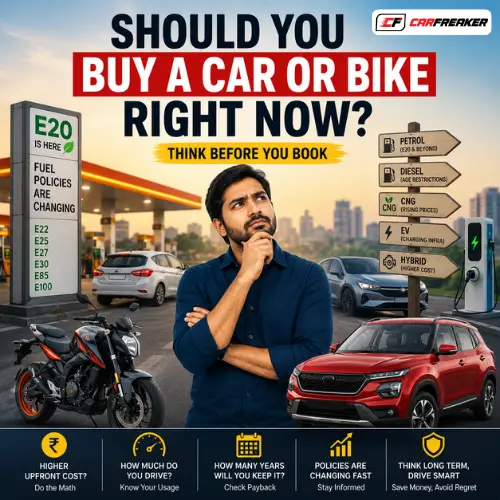
Every second day someone messages us on the consultant form asking the same thing – “bhai which car should I buy” or “is this bike worth it.” And most of the time we jump straight to comparing features, mileage, price. But lately we’ve been sitting on a bigger question that honestly nobody is talking about enough: should you even be buying right now? We know how that sounds coming from an auto site. Usually we’re the guys pushing you toward a showroom. But this time we genuinely think a lot of buyers – especially middle class families here in Gujarat and across India – need to slow down for a bit and actually understand what’s happening with fuel and vehicle policy before they sign that booking form. Not because we don’t want you to buy a vehicle, but because we want you to buy the right one, at the right time, without regretting it two years down the line. Here’s why. Petrol Isn’t What It Used to Be, and Nobody Really Knows What’s Next If you’ve filled petrol recently you’ve probably noticed it’s all E20 now – that’s petrol mixed with 20% ethanol. India hit this target in 2025, years ahead of schedule, and by April 2026 it became the standard at pumps across the country, not just in a few states. Now on paper this sounds fine – cleaner fuel, less crude import dependency, more support for farmers growing sugarcane and maize. All good things. But here’s the part that doesn’t get talked about enough: the government’s own roadmap only commits to E20 till October 31, 2026. What happens after that is still under review. There’s already a committee report pending, standards have been notified for even higher blends like E22, E25, E27 and E30, and there’s serious talk about E85 and E100 flex-fuel vehicles too. So basically, if you buy a regular petrol vehicle today, you genuinely don’t know what blend you’ll be filling into that tank two or three years from now. Older engines not built for higher ethanol content can see real issues – reduced mileage, corrosion in fuel lines, rubber components wearing out faster. Some owners have already been vocal about this, enough that it reached the Supreme Court and the ministry had to put out clarifications. That tells you it’s not a small, made-up concern. Point is – the fuel your vehicle runs on isn’t fixed anymore. It’s a moving target, and moving targets are risky when you’re taking a 5-7 year loan on a vehicle. Diesel Has Its Own Expiry Date, Literally If diesel is on your mind, especially for an SUV, there’s something you need to know before you commit lakhs of rupees. In Delhi-NCR, diesel vehicles older than 10 years and petrol vehicles older than 15 years have effectively been getting cut off from fuel stations under CAQM orders, and this whole issue has been going back and forth in the Supreme Court through 2025 and into 2026. Right now there’s some relief for existing owners, but the direction is pretty clear – cities are actively working to phase out older diesel vehicles, and other major metros are watching Delhi’s playbook closely. What this means practically – if you buy a diesel car today thinking you’ll run it for 12-15 years like people used to, that plan might not hold up, at least not in bigger cities. You could be looking at a vehicle that becomes unusable or worth very little well before you’ve finished paying it off, let alone gotten your money’s worth from it. EVs Sound Great, Until You’re Actually Charging One Outside a Metro We’re not against EVs, in fact we’ve covered quite a few – the e-Vitara, the BE.6E, Harrier EV – and the technology itself is genuinely impressive now. But let’s be real about infrastructure. Outside Ahmedabad, Surat, Vadodara and a handful of big cities, finding a working, fast public charger is still a gamble. Highway charging on long routes is improving but still patchy. If your daily use is strictly within city limits and you have space for home charging, sure, an EV can work beautifully. But if you’re someone who does long weekend drives to native place or travels between cities often, you need to go in with eyes open, not just because the showroom guy showed you a nice range number on a brochure. CNG Isn’t the “Cheap Fuel” It Used to Be Either A lot of buyers switch to CNG purely for the running cost. Fair enough, it used to be a big gap compared to petrol. But if you check the numbers, CNG rates have been climbing steadily over the last year in most cities – Delhi, Mumbai, Bangalore, Chennai, Kolkata have all seen hikes through 2025 into 2026, some cities more sharply than others depending on local taxes and gas allocation. It’s still cheaper than petrol per km, no doubt, but the gap that made CNG a no-brainer a few years back has been shrinking, and that changes your payback math on the extra cost of the CNG kit or variant. The Upfront Price Gap Nobody Explains Properly Here’s something we tell every single person who fills our consultant form, and honestly it deserves its own section because most showroom salespeople gloss over it. Take any popular hatchback or compact SUV and check the petrol variant price. Now check the CNG variant of the exact same car. In the current market that gap is close to ₹1 lakh, sometimes a little less, sometimes a little more depending on the model. That’s money you’re paying upfront, on day one, before you’ve driven a single kilometre. Now the whole logic of going CNG is that you recover this extra lakh through cheaper running cost. And that math does work – but only if your usage is genuinely high. If you’re doing decent daily kilometres, you can claw back that ₹1 lakh in about 2-3 years. But if your car mostly sits
Tata vs Mahindra EV
Cars, Reviews, Special Report, Uncategorized

⚡ Tata vs Mahindra: EV Battle Explained (Real Ground Reality)

India’s EV market is growing fast, and the Tata vs Mahindra EV battle is becoming one of the most talked-about topics right now 🔥. Both Tata Motors and Mahindra & Mahindra are pushing aggressively into electric vehicles, but their strategy and approach are quite different — thoda alag soch hai dono ka. In this article, we will break down the real ground reality — aaj kaun aage hai aur future me kaun lead karega, everything explained in simple terms. 🚗 Who actually started early? If we talk straight — Tata understood the EV game early On the other hand… Mahindra was there… but not fully serious that time 👉 So yeah, Tata got the early advantage here. 🔋 Current lineup — what’s happening right now? ⚡ Tata’s strategy (mass market focus) 👉 Simple goal: more and more people can actually afford EVs ⚡ Mahindra’s strategy (premium + future ready) 👉 Focus is clear — design, performance, and thoda “next-gen” feel 📊 Current scene: 🧠 Technology — who is doing better? This is where things get interesting… Tata: Mahindra: 👉 So for future — Mahindra might have an edge here. 💰 Pricing — the real Indian factor Let’s be honest… price matters a lot in India. 👉 And yaha clearly Tata wins, because value-for-money is still king. 🔌 Charging & ecosystem One big reason why Tata is winning right now: Mahindra is still building this side of things. 👉 So currently — Tata has the stronger ecosystem. 🚀 So, who is actually winning? 🌍 And what about MG & Hyundai? Now this is where many people forget — competition sirf in dono ka nahi hai. 👉 MG Motor India 👉 Hyundai Motor India 🔥 Final Thoughts (simple and clear) 👉 End of the day, EV market ab full race me aa chuka hai in India And honestly…next 2–3 years are going to be very interesting — asli competition tab dikhega 😎

Yamaha FZS Hybrid motorcycle with hybrid technology
Bikes, News, Uncategorized

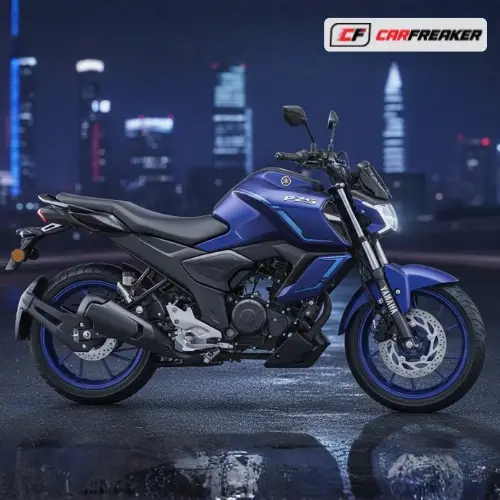
All-New Yamaha FZS Hybrid: Smart Tech Meets Street Muscle

Yamaha has quietly pulled off something interesting in the 150cc streetfighter space. The all-new Yamaha FZS Hybrid isn’t about crazy power jumps or wild design changes — it’s about smart efficiency, smoother rides, and future-ready tech. In a market where mileage still matters as much as looks, Yamaha’s Hybrid Technology could be the game-changer urban riders didn’t know they needed. Let’s break it down, CarFreaker style 🏍️🔥 What Is Yamaha’s Hybrid Technology? Before you imagine electric motors driving the wheels — relax. This is not a full hybrid like cars. Yamaha’s Smart Motor Generator (SMG) is a mild-hybrid system designed to assist the petrol engine, not replace it. How It Works: 👉 Result?✔ Smoother acceleration✔ Reduced engine load✔ Better fuel efficiency✔ Quieter starts Think of it as extra push when you need it most. Yamaha FZS Hybrid: Key Features Breakdown ⚙️ Engine & Performance This bike is built for daily rides, not drag races — and that’s exactly its strength. ⚡ Stop-Start System (SSS) One of the biggest benefits of the hybrid setup: Perfect for Indian road conditions 🚦 📱 Fully Digital TFT Instrument Cluster Yamaha has seriously upgraded the tech game: This puts the FZS Hybrid ahead of many rivals in the segment. 🎨 Design: Familiar Yet Fresh It still looks like a proper FZS, just smarter under the skin. 🛞 Ride & Handling Why Yamaha FZS Hybrid Makes Sense Today With rising fuel prices and crowded city roads, the FZS Hybrid focuses on real-world riding benefits: ✅ Better mileage✅ Smoother city performance✅ Less engine stress✅ Future-ready technology✅ Yamaha reliability It’s not chasing extreme performance — it’s chasing smart riding. Should You Buy the Yamaha FZS Hybrid? If you’re looking for: 👉 Yes, the FZS Hybrid makes solid sense. But if you want raw performance or sporty thrills — you might want to look elsewhere. Final Verdict: CarFreaker Take The Yamaha FZS Hybrid proves that hybrid tech doesn’t have to be complicated or expensive. It’s a smart evolution, not a revolution — and that’s exactly why it works. For urban riders who want style + tech + efficiency, this might just be the most sensible streetfighter Yamaha has built yet.

Maruti e-Vitara Launch
Cars, News, Uncategorized

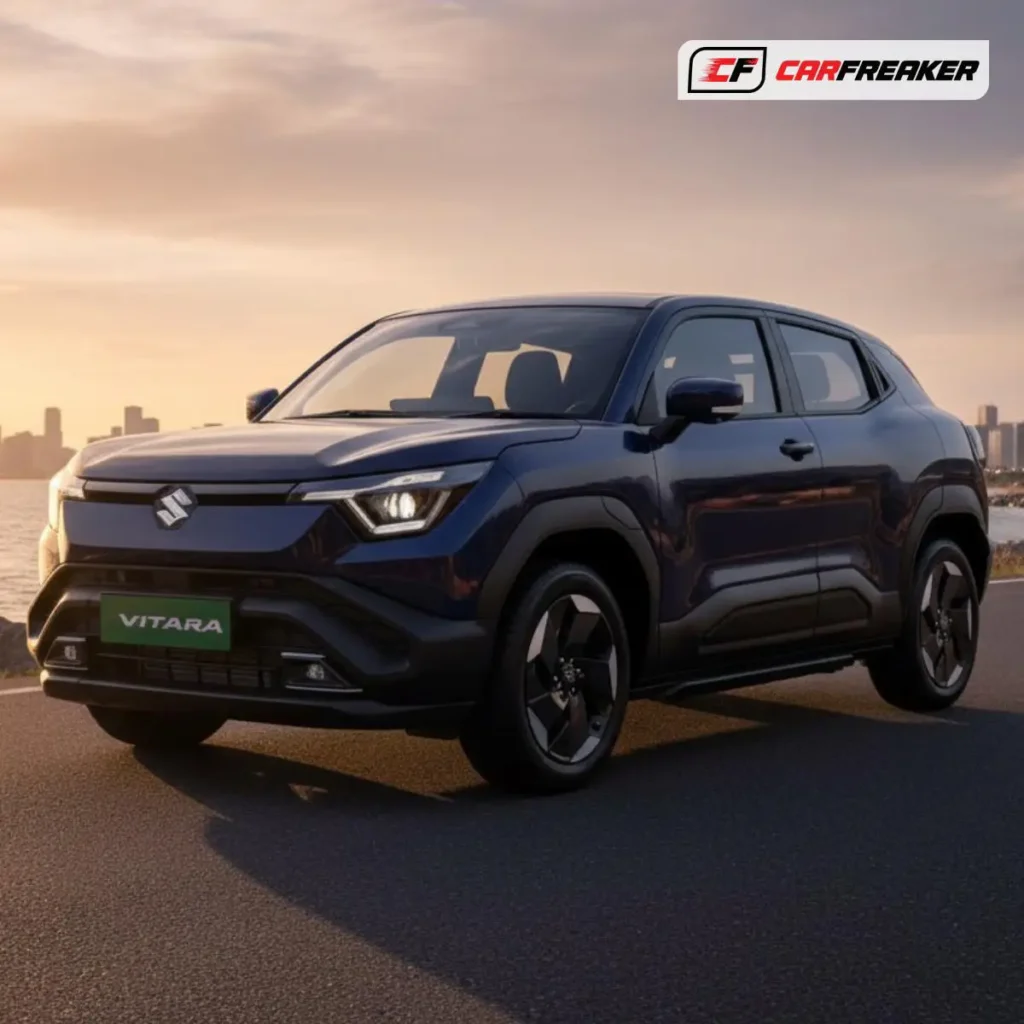
Maruti Suzuki e-Vitara India Launch: The Electric Breather India Needed?

Maruti Suzuki has finally stepped into the EV game with the all-new e-Vitara, and let’s be honest — India has been waiting for this moment for years. After dominating the ICE market for decades, Maruti is now trying to prove that it can electrify the streets just as well. But is the e-Vitara powerful enough to shake the current EV segment, or is it just another “safe play” from India’s largest carmaker? Let’s plug in and find out. ⚡ Design: Clean, Sharp & Familiar — But EV-ish The e-Vitara carries forward the SUV stance of the Grand Vitara but adds EV touches: It still looks like a Maruti — safe design, wide appeal, nothing too risky. ⚡ Battery & Performance: Finally Some Power from Maruti Expected figures: Maruti is focusing more on range efficiency, their strongest area. Not the quickest EV, but definitely aiming to be the most dependable one. ⚡ Features: Maruti Levels Up The e-Vitara packs all modern EV essentials: Maruti is finally stepping into the premium feature zone — something their EV customers definitely expect. 📊 Maruti Suzuki e-Vitara vs Competitors: Real Fight Begins The e-Vitara walks straight into a very crowded battlefield. Here’s how it stacks up: 1. Tata Nexon EV Where e-Vitara wins: Expected higher range, better Maruti service networkWhere it loses: Tata already dominates EV space, stronger brand trust in EVs 2. Mahindra XUV400 e-Vitara advantage: Better interior quality, more featuresXUV400 advantage: Much stronger performance & driving dynamics 3. MG ZS EV e-Vitara wins: Expected lower price, wider sales networkZS EV wins: Bigger size, premium interior, higher performance 4. Hyundai Creta EV (Upcoming) This is the real challenger.Creta EV will launch around the same time and is already a brand favourite. The e-Vitara will need aggressive pricing to beat this. 💰 Expected Pricing Maruti Suzuki will play it smart:₹16.99 lakh – ₹22.99 lakh (expected) If they nail the pricing, the e-Vitara can become India’s most popular EV overnight. 🎯 CarFreaker Verdict The Maruti Suzuki e-Vitara is not the most powerful or the most futuristic EV, but it has: It’s built for real Indian buyers, not just early adopters.If priced right, this could be the EV that finally pushes the Indian market from “early EV users” to “mass EV adoption”.

Mahindra BE.6E Formula Edition
Cars, News, Uncategorized

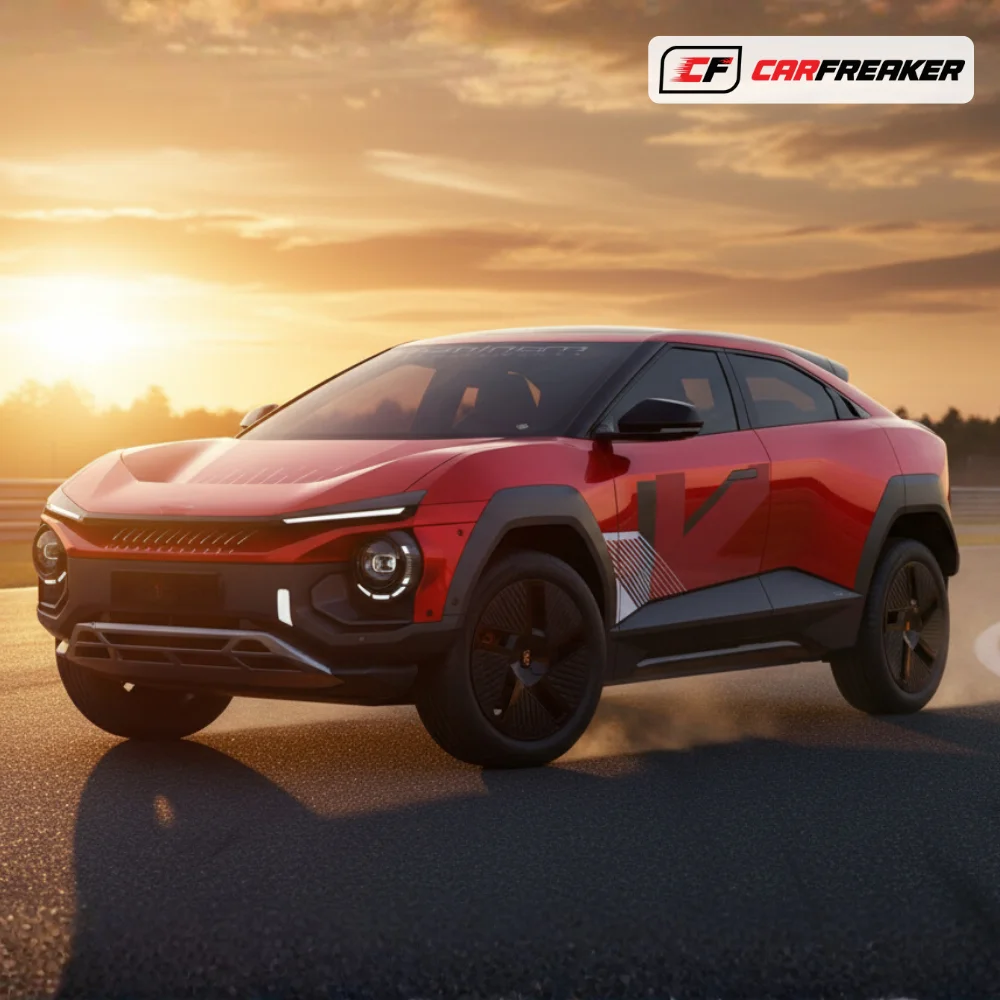
Mahindra BE.6E Formula Edition: The Electric SUV That Brings Racing DNA to the Streets

The electric car scene in India just got hotter because now in the end of 2025 Mahindra has unveiled the BE.6E Formula Edition, a sportier, racier version of the upcoming BE.6E SUV. It carries the same Born Electric platform but adds a motorsport-inspired twist for enthusiasts who love sharp styling, advanced tech, and EV performance. In true BE family fashion, the Formula Edition focuses on aerodynamics, lightweight design, and racing-grade detailing, making it stand out among mainstream EVs. Here’s everything you need to know. A Design Inspired by Formula Racing The BE.6E Formula Edition looks like a concept car rolling on Indian roads. It brings a futuristic silhouette with aggressive edges and a clean EV stance. The highlights: Mahindra has kept the design bold yet functional — exactly how performance EVs should be. Born Electric Platform: Performance Meets Technology The Formula Edition is built on Mahindra’s new INGLO EV platform, which focuses on safety, power, and flexibility. Expected performance highlights: This edition is not just about looking sporty — it is engineered for dynamic driving. Race-Inspired Interior With EV Futurism Step inside and you get a cabin that blends premium materials with racing cues. Expected features: The cabin is designed to feel modern and engaging while keeping things clean and driver-focused. Safety at the Core Mahindra is targeting 5-star global safety ratings with: BE.6E clearly blends performance with responsibility. Expected Launch & Price in India The standard BE.6 is expected to arrive around late 2025, and the Formula Edition may launch as a special performance variant soon after. Expected pricing: ₹22 lakh – ₹30 lakh (ex-showroom) depending on motor and battery choices. At this price point, it will go head-to-head with Tata Curvv EV, Hyundai Creta EV, and MG ZS EV — but the Formula Edition brings something the others don’t: pure motorsport-inspired street appeal. CarFreaker Verdict The Mahindra BE.6E Formula Edition feels like a breath of fresh air in the EV segment. It’s bold, sporty, packed with features, and offers a unique racing vibe that no other mainstream EV currently offers in India. If you want an electric SUV that turns heads and feels performance-focused right out of the box, the Formula Edition is shaping up to be a strong contender.

Best Entry Level Luxury Sedan
Cars, News, Reviews, Special Report, Uncategorized

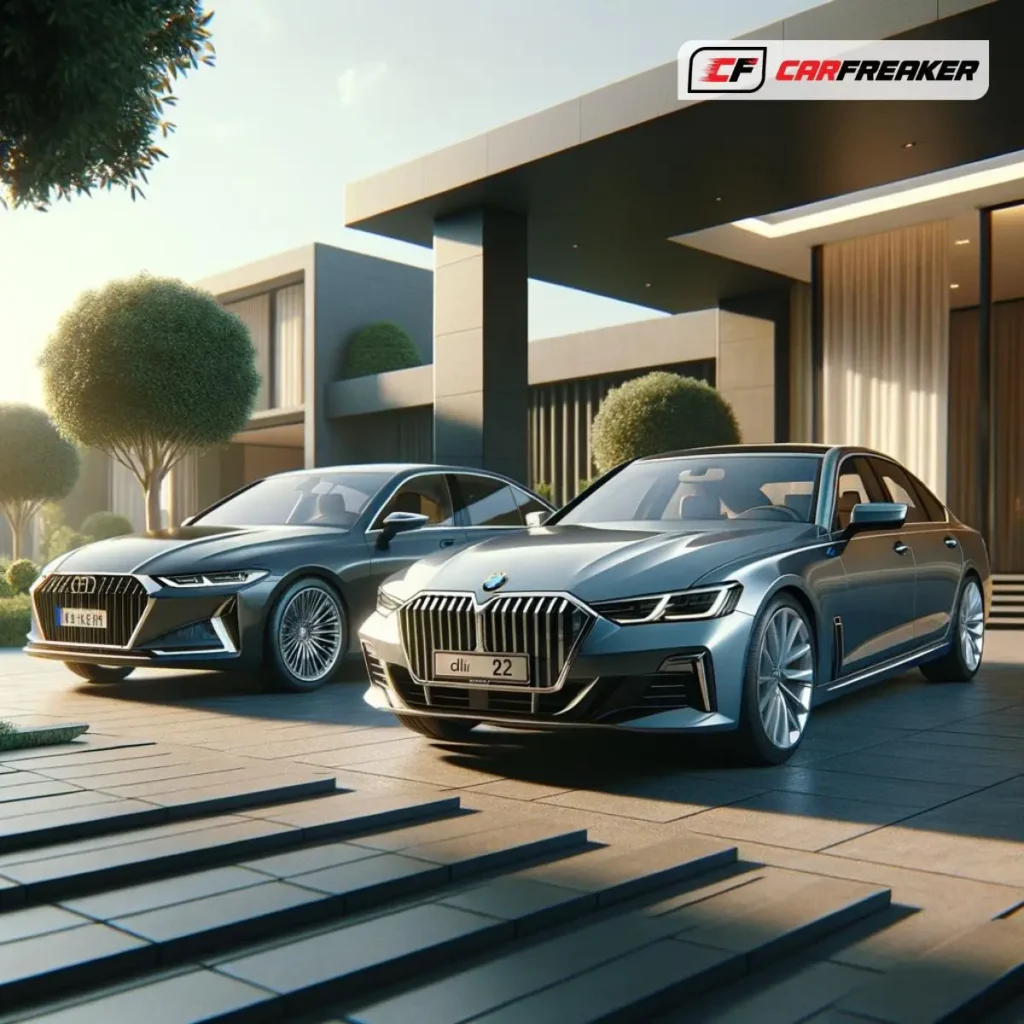
Best Entry-Level Luxury Sedans in India (2025): BMW 3 Series vs Audi A4 vs Mercedes C-Class

If you have to buy your first special germen car in India, it feels exciting, right? But at the same time, it can feel a bit confusing with so many options available in indian automobile market. When it comes to choosing the Best Entry Level Luxury Sedan in India, three names always stand out — BMW 3 Series, Audi A4, and Mercedes-Benz C-Class. Each of them promises comfort, style, and that rich badge feel. But the question is — which one really nails the sweet spot between performance, price, and daily practicality? We at CarFreaker decided to put them head-to-head to find out which sedan truly deserves to be called India’s Best Entry-Level Luxury Sedan in 2025. ⚖️ Check Quick Comparison Table Model Engine Options Power (hp) Torque (Nm) 0–100 km/h Price (Ex-Showroom) BMW 3 Series (330Li / 320Ld) 2.0L Turbo Petrol / Diesel 255 / 188 400 6.2s / 7.0s ₹61.9 – ₹73.5 lakh Audi A4 2.0L TFSI Petrol 190 320 7.3s ₹45.9 – ₹55.4 lakh Mercedes C-Class (C200 / C220d) 1.5L Turbo Petrol / Diesel (Mild Hybrid) 201 / 197 300–440 6.6s / 7.3s ₹61 – ₹66 lakh Let’s Start with Design & Styling BMW 3 SeriesIt is sporty, bold, and pure BMW attitude. The long bonnet with signature kidney grille, and low stance make it look like it’s ready to sprint even when parked and the Gran Limousine version adds rear seat space, which suits Indian buyers perfectly. Audi A4Simple. Sharp. Clean. The A4 has that elegant, business-like vibe confident without showing off. With those LED matrix headlamps and crisp body lines make it look like timeless machine. Mercedes-Benz C-ClassThey don’t call c class the “Baby S-Class” for nothing. The C-Class looks and feels expensive with smooth lines, glossy curves, and that big three pointed star that makes people turn their heads. Selection for Design And Styling:BMW = for Sporty | Audi = look like Sleek | Mercedes = which is Sophisticated and Elegance 🏠 Interiors & Comfort Parameter BMW 3 Series Audi A4 Mercedes C-Class Cabin Style Driver oriented Minimal and Classy Plush and S-Class Inspired Infotainment 14.9″ Curved iDrive 8 10.1″ MMI Touchscreen 11.9″ MBUX Display Rear Seat Comfort Best in Class (in Gran Limousine) Adequate Premium but Compact Ambient Lighting Yes Yes 64-Color Ambient Lighting Sound System Harman Kardon B&O Premium Burmester 3D BMW focuses on sporty tech with raw driving feel, Audi feels clean and simple and sophisticated, while Mercedes gives you that cocooned luxury feel. 👉 Note: If you’re planning to sit in the back seat in most times or do you have driver so go for the BMW 330Li or the C-Class. Both hit the right comfort spot. ⚙️ Engine, Ride & Handling BMW 3 SeriesThis one’s built for people who love driving. Rear-wheel drive gives it that classic BMW excitement — precise steering, planted handling, and instant response. It’s still comfy for daily drives though. The diesel variant’s pretty efficient too, hitting around 18 km/l on highways. Audi A4The all new 2 Liter TFSI petrol engine is buttery smooth. It feels light refined with super silent and sometimes it feels good to here that sound at high RPM, great for both city cruising and highway runs. You don’t get Quattro AWD here, but the balance is spot-on. Mercedes C-ClassThe C-Class plays it cool. It focuses more on ride comfort than raw aggression. The bestest mild-hybrid system keeps things smooth and efficient, and the C220d diesel feels super strong yet super refined. 👉 Verdict: 🛡️ Safety & Technology This all three sedans are loaded with 6 airbags, ABS, ESC, parking sensors, and a bunch of driver-assistance features. Feature BMW 3 Series Audi A4 Mercedes C-Class Airbags 6 6 7 ADAS Features Limited Basic Level 2 (Blind Spot, Lane Assist) 360° Camera Yes Yes Yes Wireless Apple CarPlay / Android Auto Yes Yes Yes Mercedes edges ahead in ADAS and cabin tech. BMW’s interface is slick and easy to use, while Audi keeps things simple and practical. 🧾 Maintenance & Ownership Costs (India, 2025) Aspect BMW 3 Series Audi A4 Mercedes C-Class Service Interval 1 Year / 10,000 km 1 Year / 15,000 km 1 Year / 10,000 km Avg Annual Service Cost ₹30,000 to ₹40,000 Approx ₹25,000 to ₹35,000 Approx ₹35,000 to ₹45,000 Approx Extended Warranty (5 yrs) ₹1.2 lakh ₹1 lakh ₹1.5 lakh Maintenance Packages ₹1.6 lakh (5 yrs) ₹1.3 lakh (5 yrs) ₹1.8 lakh (5 yrs) Resale (After 5 years) ~60% ~55% ~62% 👉 Observation:BMW’s plans are super clear and with easy to track system. Mercedes costs a little more but holds its resale value better. Audi, meanwhile, is the easiest to own overall. 🧍‍♂️ Real Customer Reviews (2025) BMW 3 Series Owner (Mumbai)“Every drive feels special. BMW service has improved a lot — pickup and drop are smooth now. Parts can be pricey though.” Audi A4 Owner (Bangalore)“My A4 still feels tight and solid after 4 years. Service is great, but resale isn’t the best. Still, amazing comfort for the money.” Mercedes C-Class Owner (Delhi NCR)“The car feels like a mini S-Class — silent, smooth, and classy. Maintenance is a bit heavy, but resale and that Mercedes charm make up for it.” 💬 Which One Should You Buy? There’s really no wrong pick here. It all depends on what luxury means to you. Type of Buyer Best Choice Driving Enthusiast Close Your Eyes And just Buy -> BMW 3 Series Tech-Lover / Daily Commuter Easy to ride and almost feet in every road -> Audi A4 Comfort & Prestige Seeker Also want brand name -> Mercedes C-Class 👉 CarFreaker’s Pick (2025):The Mercedes C-Class wins for its overall luxury and long-term ownership feel.But if you want that emotional connect every time you drive — BMW 3 Series, hands down. 🏁 Final Thoughts Buying a luxury car in india is not just a purchase it’s a feeling. Whether you pick the 3 Series, A4, or C-Class, you’re already living a dream that many people wish for. So, what is

Mahindra Bolero 2025 features
Cars, News, Reviews, Uncategorized

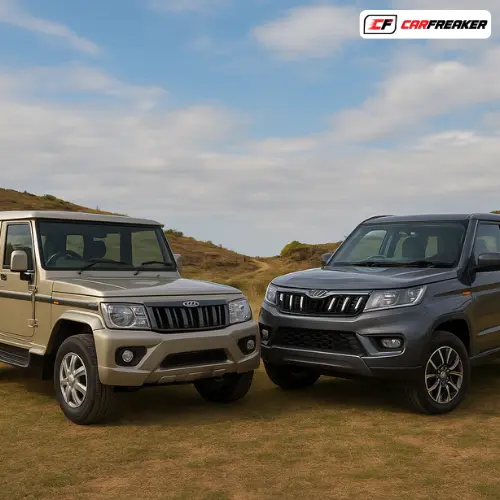
All-New Mahindra Bolero & Bolero Neo 2025: What is New and Why They Still Matter

Some cars fade with time. The Mahindra Bolero? It just keeps finding new roads to conquer — especially in India. The all new Mahindra Bolero 2025 features a all new fresh design which still carries its iconic old style boxy charm, proving that timeless toughness never goes out of style. For over two decades, this boxy and rugged SUV has been India’s go-to machine for tough terrains and tougher lives. From narrow village roads to never-ending highways, Bolero has always shown up — simple, strong, and absolutely dependable. But now, in 2025, Mahindra has given its younger cousin, the Bolero Neo, a thoughtful refresh. The updates are not flashy or over the top — they’re practical, useful, and perfectly in tune with what Indian buyers really need. This is not a “look at me” kind of update. It’s Mahindra saying, “We see you, Bolero family — here’s something better for you.” Let’s take a real-world look at what’s changed, what hasn’t, and why these two SUVs continue to be so close to Mahindra’s heart — and India’s roads. What’s New in the 2025 Bolero & Bolero Neo 1. Subtle Design Tweaks That Actually Work The 2025 Bolero hasn’t lost its old school boxy charm. With this new required update, Mahindra has sharpened the front grille with new chrome accents and reworked the bumper for a slightly more robust and better new stance. It looks familiar — but fresher. The dual-tone alloys and darker body accents give it a cleaner, more modern appeal without losing the rugged vibe. From a distance, you’ll still recognize it instantly — that’s the magic of Bolero’s design DNA. The Bolero Neo, on the other hand, has gone a bit younger. A new grille, trendier dual-tone shades like Jeans Blue and Concrete Grey, and more urban flair make it look at home both in city parking lots and dusty highways. As we’d say at CarFreaker — “It’s like your old friend showing up in a new jacket — still the same heart underneath.” 2. Interiors That Finally Feel Fresh Step inside the new Bolero, and it immediately feels more pleasant than before. The changes aren’t fancy, but they’re needful and required. The seats now come in leatherette upholstery, the dashboard has a dual-tone finish, and they’ve added a touchscreen infotainment system with proper USB Type-C ports and steering-mounted controls. These are small touches, yes — but they make daily drives feel more civilized. Even the switchgear feels more solid now. In the Bolero Neo, the cabin feels a notch higher with better bolstering on seats, chunkier steering, and a rear-view camera that finally takes the guesswork out of reversing. You won’t mistake it for a luxury SUV — but that’s not the point. The all-new Bolero and Bolero Neo feel like they were updated by someone who actually daily drives in India, not just sits in an office sketching ideas. 3. The Same Trusted Heart Under the Hood Mahindra didn’t change the formula that works. Both SUVs continue with the tried-and-tested 1.5L diesel engine, paired with our best old-school 5-speed manual gearbox. You still get the rear-wheel-drive setup, which keeps that authentic SUV feel alive.And the mileage? Around 17–18 km/l, depending on how you drive. At CarFreaker, we’ll take reliability over gimmicks any day — and that’s exactly what Mahindra delivers here. 4. More Variants, Smarter Value Mahindra has also expanded the lineup this year: What’s interesting is that Mahindra hasn’t jacked up prices. In fact, for once, an upgrade feels like better value.In today’s market where everything’s getting pricier, that’s a big win. Old Model vs New 2025 Model: Real Differences Category Old Model New 2025 Model Exterior Older grille, fewer colors Sharper design, chrome, dual-tone Interiors Plain dashboard, fabric seats Dual-tone cabin, leatherette seats Infotainment 2-DIN audio Touchscreen + steering controls Rear Camera Not available Standard on Neo top trims Comfort Basic Improved seating & cooling Engine 1.5L diesel Same, refined tuning Safety Dual airbags, ABS Same + rear camera assist Price Range ₹8.8–9.9 lakh ₹7.99–9.99 lakh It’s not an overhaul — it’s refinement done right. Why Bolero & Bolero Neo Are Still Mahindra’s Pride 1. Because They’re the Heartbeat of Rural India While the XUV700 and Thar grab headlines, it’s the Bolero that silently does the heavy lifting.In small towns, farms, and hilly terrains, you’ll always find a Bolero doing something important — carrying produce, families, or even school kids. It’s not a style statement. It’s a way of life. 2. They Represent Simplicity and Strength Bolero has never pretended to be fancy. It’s honest — a proper body-on-frame SUV that can take years of beating and still keep going. In a market where SUVs are turning into “soft roaders,” Bolero stands tall as the last of the old-school tough guys. 3. The Neo Brings a New Generation Along The Bolero Neo was Mahindra’s smartest move — it keeps the Bolero legacy alive while giving younger buyers something more relatable. If the original Bolero is your hardworking uncle, the Neo is his son who’s just moved to the city. Different vibes, same genes. 4. Built for India, Not Imported for India Every nut, bolt, and suspension setting feels tuned for real Indian roads. From potholes to gravel tracks, this SUV doesn’t flinch. That’s why fleet owners, government departments, and villagers still swear by it.No fancy alloys or complex systems to break — just pure, Indian engineering honesty. What Lies Ahead Mahindra is reportedly testing the next-generation Bolero, and the spy shots hint at something exciting — possible LED lights, a more modern chassis, maybe even mild-hybrid tech. If that’s true, the 2025 version is a warm-up — keeping the brand alive and loved while Mahindra prepares for the next leap. Should You Check It in 2025? Pick the Bolero if: Pick the Bolero Neo if: Both deliver what really matters — peace of mind, not just features on paper. Pros 👍 Cons 👎 Conclusion The 2025 Mahindra Bolero and Bolero Neo aren’t

Hyundai i20 Dark Edition: A Hatchback That Redefines Street Style | CarFreaker
Cars, News, Reviews, Uncategorized

Hyundai i20 Dark Edition: A Hatchback That Redefines Street Style | CarFreaker

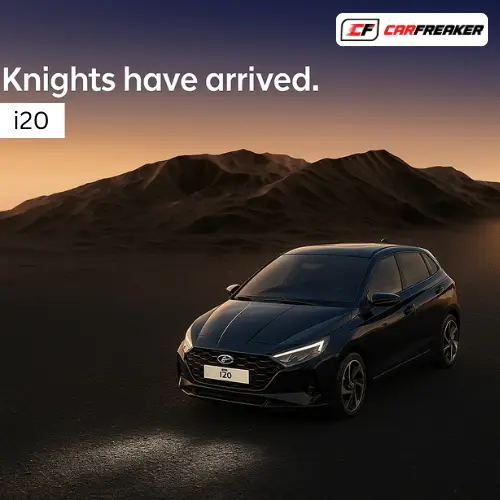
🖤 Hyundai i20 Dark Edition: A Hatchback That’s Got Swagger | CarFreaker Let’s be honest—most hatchbacks are just… there. They do their work, sure, but they don’t really make you feel special and feel unique. Most of all are just same as other options except polo but that is discontinued. But then Hyundai dropped the dark edition of i20, and suddenly, things got intimating here. It’s like the regular i20 hit the gym, got a fresh wardrobe, and now struts around like it owns the road.. Driving it? It just clicks. It’s stylish, very alive, and got just enough edge to make you feel like you’re behind the wheel of something different.That’s the CarFreaker way: bold, confident, and unapologetically cool with dark edition. 👀 First Look: Black Is the New Bold You ever see a car and just stop mid-scroll or mid-walk? That’s what happens when the i20 Dark Edition rolls by. It’s got this slick blacked-out look that makes you wanna stare. The Hyundai logo? Black. The wheels? Black. Even the grille’s got that glossy black finish that screams premium. And then there’s the Knight Edition badge—small detail, big flex. It’s like saying, “Yeah, this ain’t the regular i20. This is the cool one.” 🖤 Exterior Stuff: Clean, Sharp, and a Bit Savage Hyundai didn’t just paint it black and call it a day. Nah, they went all in: Basically, it’s the kinda car that looks good parked outside a cafe or blasting down the highway. It’s got that CarFreaker energy—bold but not loud. 🎧 Inside the Cabin: Chill Meets Class Step inside and it’s like stepping into a lounge. The whole cabin’s black, with brass-colored bits that give it a fancy touch. Not flashy, just cool. Stuff you’ll notice: It’s comfy, techy, and kinda makes you wanna take the long way home. That’s the CarFreaker way. 🚗 Under the Hood: Not Just a Pretty Face Looks are great, but what’s under the hood matters too. Good news—the i20 Dark Edition’s got options. i20 Knight Edition: i20 N Line Knight Edition: It’s smooth, quick off the line, and handles city traffic like a champ. Plus, fuel efficiency’s solid—around 18 to 20 km/l. So yeah, it’s fun without being thirsty. 🛡️ Safety: Hyundai Didn’t Skip This Part Just ‘cause it looks cool doesn’t mean it forgot about safety. The i20 Dark Edition’s got: It’s also got a 4-star Bharat NCAP rating, which means it’s not just stylish—it’s solid. That’s something we at CarFreaker always appreciate. 💸 Price Talk: Worth It? Here’s the breakdown: Yeah, it’s a bit more than the regular i20, but you’re getting a whole lot more. It’s not just a car—it’s a flex. 🆚 Rivals: How It Compares You got the Tata Altroz Dark Edition, Maruti Baleno, Honda Jazz in the mix. All solid cars. But the i20 Dark Edition? It’s got that extra polish. It feels more put together, more premium. Tata’s Dark Edition is nice, but Hyundai’s version feels like it was designed by someone who really gets style. That’s why it’s a CarFreaker favorite. 🎯 Who’s It For? If you’re: Then yeah, this one’s for you. 🏁 Final Thoughts: This One’s Got Soul At CarFreaker, we don’t just talk specs—we talk feels. And the Hyundai i20 Dark Edition? It feels almost perfect. It’s stylish, smart, and got just enough edge to make all of us feel like you’re driving something very special car.

Royal Enfield Classic 350 vs Honda CB350: Detailed Comparison
Bikes, Reviews, Uncategorized

🏍️Royal Enfield Classic 350 vs Honda CB350 for CarFreakers

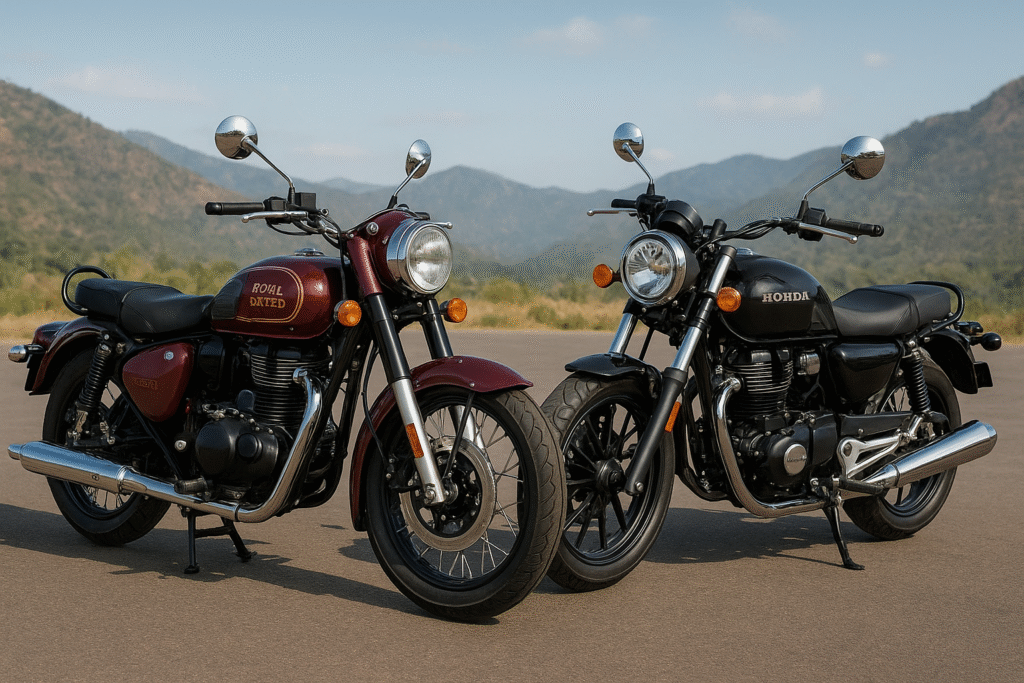
Hello CarFreakers! Classic 350 or CB350? Yeh toh ultimate cruiser fight hai. In India’s 350cc segment, these two bikes are the most popular choices. Whether you’re drawn to old-school charm or crave modern tech, this comparison will help you decide—kaunsi bike sahi rahegi aapke liye. Engine & Performance: Thump vs Tech Specification Royal Enfield Classic 350 Honda CB350 Engine Capacity 349cc 348.36cc Max Power 20.2 bhp @ 6100 rpm 20.7 bhp @ 5500 rpm Max Torque 27 Nm @ 4000 rpm 29.4 Nm @ 3000 rpm Transmission 5-speed manual 5-speed manual Top Speed ~115 km/h ~130 km/h The Classic 350 delivers a laid-back ride with that woh famous thumping sound—a signature that retro lovers absolutely adore. The CB350 packs slightly more punch and offers smoother gear shifts, perfect for those who want to fauran chalna ho toh best. Verdict: If you want punchy performance, the CB350 aage nikal gaya. Design & Build: Vintage vs Neo-Retro Royal Enfield Classic 350 Honda CB350 Verdict: Love vintage? Classic 350 is your king. Prefer a modern vibe? CB350 dil jeet lega. Features & Tech: Simple vs Smart Feature Classic 350 CB350 ABS Single Channel Dual Channel Bluetooth No Yes Navigation No Yes Assist & Slipper Clutch No Yes Instrument Cluster Analog Semi-digital The CB350 comes loaded with smart features like Bluetooth, voice control, slipper clutch, and traction control. The Classic 350, on the other hand, stays true to its roots—apni rockstar hai when it comes to raw riding feel. Verdict: Tech-savvy riders? CB350 ka jawab nahi. Mileage & Efficiency: Both Aam Aadmi Friendly Honda CB350 claims a mileage of 42.17 kmpl. Classic 350 isn’t far behind at 41.55 kmpl. In real-world conditions, mileage may vary depending on your riding style—thoda farq pad sakta hai. Verdict: CB350 edges ahead slightly, but dono hi dhang se chalti hain. Price & Value: Budget vs Premium Model Ex-Showroom Price (INR) Royal Enfield Classic 350 ₹1.97 lakh Honda CB350 ₹2.14 lakh Thanks to GST cuts, prices have dropped—thodi kam ho gayi hai, with savings ranging from ₹18,000 to ₹24,000. Classic 350 is more budget-friendly, while CB350 justifies its premium with better tech and performance. Verdict: Paise bachana ho toh Classic 350. Thoda invest karna hai toh CB350 le lo. User Experience & Community: Legacy vs Reliability With the Classic 350, you get a strong brand legacy, massive fan base, and riding clubs known for epic tours—poora vibe milta hai. The CB350 appeals to the newer generation—ideal for city commutes and weekend getaways. Honda’s reliability and service network offer a full solid package. Verdict: Want legacy and community? Go Classic. Prefer reliability and refinement? CB350 is your pick. Final Verdict: Which One Should You Choose? Go for the Royal Enfield Classic 350 if: Choose the Honda CB350 if: Conclusion The Classic 350 vs CB350 showdown is a battle between tradition and innovation. For CarFreakers, it’s all about where your jazbaat lie—towards timeless design or cutting-edge performance. Whichever bike you choose, maze ki ride pakki hai. Stay tuned, CarFreakers! More updates and ride stories coming your way—on-road aur online dono jagah.

GST 2.0 car discounts
Cars, News, Trending, Uncategorized

Top 10 Cars with Biggest Price Drops Under GST 2.0 Reform

GST 2.0 Car Discounts Are Making Cars Cheaper in India 🚗💸 Big news for car buyers! GST 2.0 is here, and it’s changing car prices across India. If you’re planning to buy a car, this update could save you a lot of money. At Carfreaker, we’ve looked into how GST 2.0 car discounts are helping buyers. The results are exciting. What Is GST 2.0? GST 2.0 is a new tax rule for cars. It started on September 22, 2025. The government removed extra taxes called “cess” and made GST rates simpler. Here’s how the new GST rates compare: Car Type Old GST New GST Discount Small petrol cars ~29% 18% 11% Small diesel cars ~31% 18% 13% Mid-size cars ~45% 40% 5% Large cars ~50% 40% 10% Electric cars 5% 5% No change Thanks to GST 2.0 car discounts, many cars now cost less. That’s great news for families and first-time buyers. Top 10 Cars with Big GST 2.0 Discounts We checked the numbers at Carfreaker. These cars have dropped the most in price: Rank Car Type Old Price New Price Savings 1 Toyota Fortuner SUV ₹52.68L ₹49.19L ₹3.49L 2 Kia Carnival MPV ₹34.50L ₹30.02L ₹4.48L 3 Hyundai Tucson SUV ₹31.00L ₹28.60L ₹2.40L 4 Mahindra Scorpio-N SUV ₹15.50L ₹14.05L ₹1.45L 5 Tata Nexon Compact SUV ₹9.80L ₹8.25L ₹1.55L 6 Hyundai Venue Compact SUV ₹9.50L ₹8.27L ₹1.23L 7 Maruti WagonR Hatchback ₹6.20L ₹5.50L ₹70K 8 Tata Altroz Diesel Hatchback ₹8.10L ₹7.00L ₹1.10L 9 Toyota Camry Sedan ₹46.17L ₹45.16L ₹1.01L 10 Mahindra XUV700 SUV ₹17.50L ₹16.07L ₹1.43L More Cars, More Savings Here’s how GST 2.0 car discounts help across different types: Hatchbacks Sedans SUVs Why GST 2.0 Car Discounts Matter Carfreaker Tips for Buyers What’s Next? At Carfreaker, we’re covering everything from GST 2.0 car discounts to fuel policy changes. Want to know more about Maruti Suzuki Victoris or Hyundai Creta King? Curious about VinFast VF6? We’ve got all the updates. 📲 Follow Carfreaker:

Scroll to Top