India’s Ultimate Car & Bike News Hub

Electric

EV cars under 50 lakh in India lineup 2026
Cars, Electric, News

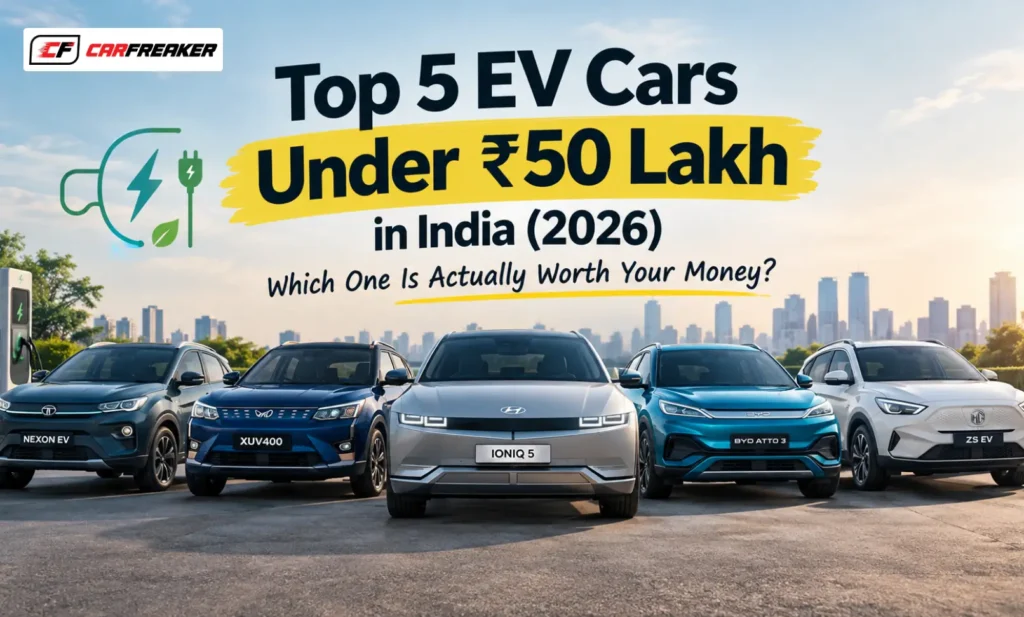
Top 5 EV Cars Under ₹50 Lakh in India (2026): Which One Is Actually Worth Your Money?

If you are hunting for EV cars under 50 lakh in India, this is genuinely the most interesting price bracket to shop in right now. Below this budget that you are mostly choosing between range and features. Above ₹50 lakh in india, you’re in Tesla or Ioniq 5 or BMW territory. But right here, in this ₹19–50 lakh sweet spot, you get real range (500+ km on most of these), proper performance, and tech that actually feels premium. We went through owner reviews on CarDekho, CarWale, 91Wheels and MeraEV – not just spec sheets – to figure out what people are actually saying about range, service costs, and reliability after driving these EV cars under 50 lakh for a few months. Here’s our honest Top 5. Quick Comparison: EV Cars Under 50 Lakh in India (2026) Car Price (Ex-showroom) Claimed Range Real-World Range (approx.) Mahindra BE 6e ₹18.90 – 26.90 Lakh Up to 682 km ~420 – 460 km Mahindra XEV 9e ₹21.90 – 30.50 Lakh Up to 656 km ~440 – 525 km BYD Atto 3 ₹24.99 – 36.74 Lakh Up to 521 km ~370 – 400 km BYD Seal ₹41.00 – 53.15 Lakh Up to 650 km ~480 – 520 km Volvo EX30 ₹41.00 Lakh (single variant) 480 km (WLTP) ~350 – 380 km (On-road prices run 8–15% higher than ex-showroom depending on your state’s EV policy – some states waive RTO entirely for EVs, so check locally before you panic about the final number. For official policy details, see the Government of India’s EV portal, e-AMRIT.) 1. Mahindra BE 6e – The Style-First Pick Among EV Cars Under 50 Lakh Price: ₹18.90 – 26.90 Lakh (ex-showroom) The BE 6e is the one that turns heads. Coupe – SUV styling, Mahindra’s INGLO electric platform, and a claimed range that genuinely competes with cars priced way higher. It’s available with 59 kWh and 79 kWh battery options, and the bigger pack claims up to 682 km – which even on a bad day should comfortably clear 450+ km in mixed driving. Full specs are on Mahindra’s official BE 6e page. What owners are actually saying: Reviews on CarDekho and CarWale consistently praise the looks and the punchy acceleration – several owners specifically call out how “zippy” it feels in city traffic. On the flip side, more than one reviewer flagged that the sloping roofline eats into rear headroom, and rear-seat comfort gets a mixed response. On range, one CarWale reviewer running the 79 kWh version reported a realistic 460 km around town – solid, though clearly below the claimed figure, which is normal for any EV in Indian conditions. Service cost: Mahindra’s dealer network is genuinely one of the widest in the country, which matters a lot for an EV – you’re never too far from support. Owners on forums generally report EV servicing costs staying low since there’s no engine oil or major mechanical wear parts involved. Best for: Buyers who want an EV that looks and drives like something way above its price tag. 2. Mahindra XEV 9e – The Long-Range Family SUV Price: ₹21.90 – 30.50 Lakh (ex-showroom) Think of the XEV 9e as the BE 6e’s more practical sibling – same INGLO platform, but with a proper SUV silhouette and more usable space. The top – spec 79 kWh variant claims 656 km, and it is genuinely one of the best reviewed EV cars under 50 lakh right now in terms of owner satisfaction. What owners are actually saying: Owner ratings on 91Wheels average around 4.7/5, with people specifically calling out the range confidence on long drives and the fast-charging speed (20 – 80% in about 20 minutes with a hypercharger). A Faridabad-based owner who documented their ownership experience after two months and a couple of road trips said they hadn’t run into range anxiety at all, simply because they map out charging stops ahead of time. On the flip side, AC home charging still takes 6 – 9 hours depending on your charger setup, so a home wallbox is basically non-negotiable. Service cost: Owner reviews rate maintenance cost at 4.7/5 on average. Mahindra’s service centers already have EV-trained staff in most major cities. Best for: Families who do frequent long-distance drives and want the least range anxiety in this list. 3. BYD Atto 3 – The Value-for-Features SUV Price: ₹24.99 – 36.74 Lakh (ex-showroom) The Atto 3 has been around in India since 2023, so it’s got more ownership history than most EV cars under 50 lakh on this list – which makes its feedback more trustworthy. Full details are on BYD India’s official site. What owners are actually saying: CarDekho and Autocar India reviews rate it well on comfort and features, with the claimed 521 km range holding up to roughly 370 – 400 km real-world in mixed city and highway use – about 75 – 80% of the claimed figure. Reviewers note that BYD hasn’t published a very detailed local-market feature list on some variants, so it is worth confirming exact specs at the showroom. Service cost: BYD’s India service network has grown steadily since 2023 but is still smaller than Mahindra’s or Tata’s. Running costs are rated highly by owners since electricity cost per km works out to a fraction of petrol. Best for: Buyers who want a well tested EV with a few years of real ownership data behind it. 4. BYD Seal – The Performance Sedan Price: ₹41.00 – 53.15 Lakh (ex-showroom) – base variant fits comfortably among EV cars under 50 lakh If you want an EV that actually feels quick, the Seal is the one. It’s built on BYD’s e Platform 3.0, uses Cell to Body battery integration for a lower centre of gravity, and the Performance variant does 0–100 km/h in under 4 seconds. What owners are actually saying: Owner satisfaction on MeraEV sits around 4.5–4.6 out of 5 across nearly a hundred reviews, with people specifically highlighting the smooth, silent driving experience and confidence-inspiring
VinFast VF6 India 2025 – Features, Price, Pros, Cons & Competitors
Electric, News, Reviews, Uncategorized

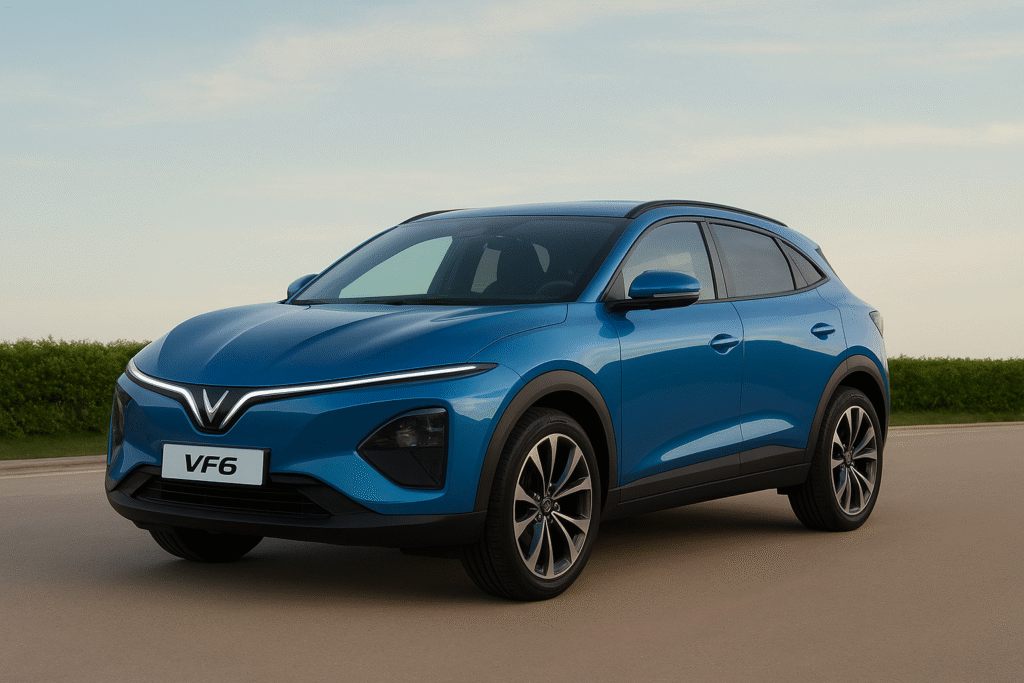
VinFast VF6 India 2025 – Features, Price, Pros, Cons & Competitors

The VinFast VF6 India launch has generated excitement in the electric SUV market. As India rapidly shifts towards clean mobility, global EV brands like VinFast are entering the race to attract customers who want style, performance, and affordability. In this blog by Carfreaker, we explore what makes the VF6 special, why you should consider it, reasons to think twice, and how it compares with its rivals. What Makes the VinFast VF6 Special for India? The VinFast VF6 is a compact electric SUV designed with modern Indian buyers in mind. Its sleek design, connected features, and efficient battery system place it in the sweet spot between affordability and premium feel. Key Highlights: Why Buy the VF6 in india? Here’s why the VF6 could be the right choice for Indian buyers: Why Not Buy the VinFast VF6 in India? While the VF6 is impressive, there are reasons some buyers may hesitate: VF6 vs Competitors in India To understand where the VF6 stands, let’s compare it with its main competitors in India: Model Battery Range Ex-Showroom Price (Approx) Key Features VinFast VF6 ~400 km ₹20–22 Lakh (Expected) Futuristic design, ADAS, fast charging Tata Nexon EV ~325 km ₹15–19 Lakh Strong service, proven reliability MG ZS EV ~461 km ₹23–25 Lakh Premium interior, long range Hyundai Kona EV ~452 km ₹23–24 Lakh Sporty handling, premium features Mahindra XUV400 EV ~375 km ₹16–20 Lakh Spacious cabin, strong brand trust Why the VF6 Could Succeed in India Why the VF6 Might Struggle in India Conclusion – Should You Buy the VinFast VF6 in India? The VinFast VF6 India 2025 is a promising EV SUV that blends futuristic design with affordability. It’s ideal for buyers who want something different from mainstream brands, with modern features and a long range. However, cautious buyers may prefer tried-and-tested options like the Nexon EV or MG ZS EV until VinFast proves its long-term presence in India. At Carfreaker, we believe the VF6 has potential but its success depends on pricing, service support, and trust-building in India. If you’re exploring the future of mobility in India, don’t miss our other in-depth blogs on Carfreaker. Read about the latest GST revision on cars and bikes, explore how E20 fuel policies impact car buyers, check out Maruti Suzuki Victoris with its 5-star Bharat NCAP rating, and see what’s new in the Hyundai Creta King variants. These blogs give you a broader view of the changing automotive landscape alongside the VinFast VF6. For more instant updates, sneak peeks, and exclusive content, stay connected with Carfreaker on social media. Follow our LinkedIn page for professional insights and industry news, and join us on Instagram for quick stories, car images, and daily auto buzz.

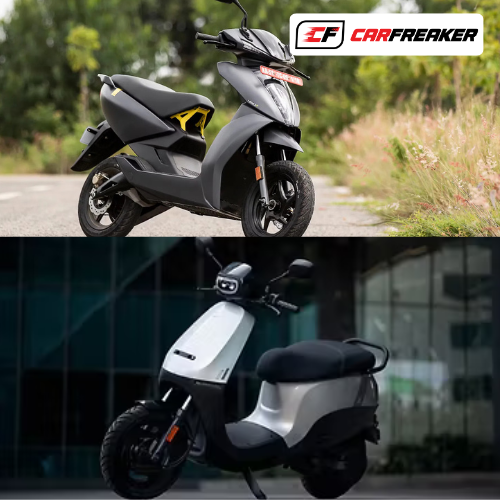
Ather vs Ola Electric Scooters 2025 – Which One Should You Buy?
Bikes, Electric, News

Ather vs Ola Electric Scooters 2025 – Which One Should You Buy?

The Indian electric scooter market is booming in 2025, and the two names that dominate the space are Ather vs Ola Electric Scooters. If you’re planning to buy an EV scooter this year, chances are you’re comparing these two brands. In this blog, we’ll explore the main differences, pros and cons, service costs, reliability, and pick a winner based on customer requirements. Main Differences Between Ather and Ola Electric Scooters Design & Engineering Performance & Range Verdict: Ola wins on speed and range, while Ather is better for smooth city rides. Technology & Features Practicality & Comfort Why Choose Ola Electric? Why Choose Ather Electric? Service Cost & Service Network in India Winner in Service: Ather Electric Reliability: Ather vs Ola Winner in Reliability: Ather Electric Final Winner: Based on Customer Needs Customer Requirement Best Choice Long-range, highway commutes Ola S1 Pro Daily city rides, reliability Ather 450X/Apex Hassle-free service & support Ather Electric Final Verdict: If you want performance and range, Ola is a strong contender. But for everyday city riders who value service and reliability, Ather Electric is the better long-term choice. Other EV Scooter Brands in India While Ather vs Ola Electric Scooters dominate the EV two-wheeler market, they are not the only players. TVS iQube has gained traction with reliability and trusted brand value. Bajaj Chetak Electric appeals to retro lovers who want modern EV tech. Hero Vida V1 benefits from Hero MotoCorp’s network. Startups like River Indie and Simple Energy are also entering the market. Follow Us for More EV Insights Want instant updates on EV launches and auto news? 🚀For instant updates on the latest bike launches, fuel policies, and automotive news, you can follow us on Instagram and LinkedIn. We share quick insights, exclusive images, and breaking stories so you never miss an update. Stay connected with us for all things auto! Important Note on Green Fuel Transition While buying an EV scooter, don’t forget to explore how India is shifting toward E20 fuel compatibility and cleaner energy. Learn more in our blog on Supreme Court E20 fuel verdict.

Cars, Electric, News, Trending

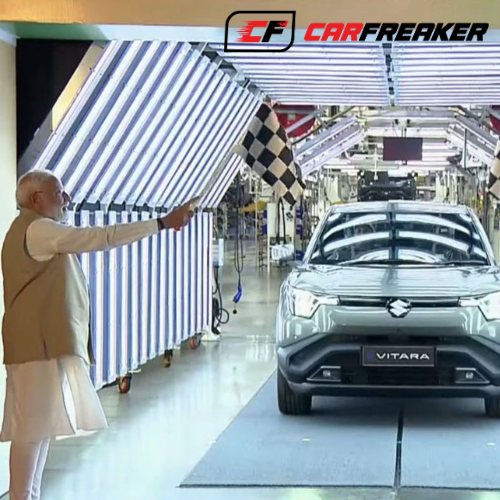
PM Modi Flags Off Maruti Suzuki Electric Car, Opens Battery Plant

PM Modi Flags Off Maruti Suzuki’s Electric Car, Inaugurates Battery Plant in Ahmedabad India’s electric vehicle (EV) journey just hit another milestone. Prime Minister Narendra Modi flagged off Maruti Suzuki’s much-awaited electric car while also inaugurating the company’s state-of-the-art battery manufacturing plant in Ahmedabad, Gujarat. This landmark move promises to accelerate the shift toward sustainable mobility in India and marks a major step forward in the country’s green energy ambitions. Maruti Suzuki’s Electric Car Enters the EV Market For decades, Maruti Suzuki has been India’s most trusted carmaker. Known for producing reliable, affordable, and fuel-efficient vehicles, the brand has become a household name. With the launch of its first electric car, the company signals a new era of innovation and commitment to sustainability. This move is not just about launching a new car—it’s about reshaping how India thinks about mobility. By entering the EV space, Maruti Suzuki is making a bold statement: clean energy vehicles are no longer a niche product for the elite, but a practical solution for everyday Indians. Why Ahmedabad for the Battery Plant? Maruti Suzuki’s new plant in Hansalpur, Ahmedabad isn’t just about manufacturing batteries—it’s about building an ecosystem that supports the entire EV value chain. The choice of location is strategic and reflects a long-term vision. Key Reasons: The Hansalpur plant is expected to create thousands of jobs, both directly and indirectly. From engineers and technicians to logistics and support staff, the ripple effect on employment will be significant. Moreover, the plant will help reduce India’s dependence on imported batteries, boosting self-reliance under the Make in India initiative. PM Modi’s Push for Electric Mobility Prime Minister Narendra Modi has consistently emphasized the importance of electric mobility in India’s development strategy. During the inauguration, he stated that “India must lead the global EV revolution.” His government has rolled out several schemes to support this vision: These initiatives are aligned with India’s Net Zero 2070 climate goals. By promoting EVs, the government aims to reduce carbon emissions, improve air quality, and decrease reliance on fossil fuels. Benefits of Maruti Suzuki’s Electric Car for Indian Consumers 1. Affordability Maruti Suzuki has a long-standing reputation for making cars that are budget-friendly. Whether it’s the iconic Maruti 800 or the popular Alto, the brand has always catered to the middle class. The new electric car is expected to follow the same philosophy, making green mobility accessible to millions. 2. Low Running Costs Electric cars significantly reduce fuel expenses. With petrol prices constantly fluctuating, switching to an EV can lead to major savings over time. Maintenance costs are also lower since EVs have fewer moving parts compared to traditional internal combustion engine vehicles. 3. Sustainability EV adoption means reduced carbon emissions, cleaner air, and progress toward India’s green future. Every electric car on the road contributes to a healthier environment, especially in cities struggling with pollution. 4. Nationwide Service Network One of Maruti Suzuki’s biggest strengths is its extensive service network. With thousands of service centers across the country, maintaining an EV will be easier for early adopters. This is a major advantage over newer EV brands that are still building their support infrastructure. The Bigger Picture: India’s EV Market The Indian EV sector is expected to reach USD 113.99 billion by 2029. With Maruti Suzuki entering the field, the competition with Tata Motors, Mahindra, and MG Motor is set to heat up. This will likely lead to more innovation, better pricing, and improved features for consumers. EV Market Highlights: The entry of Maruti Suzuki into this space is expected to shake things up. With its brand trust, manufacturing scale, and customer reach, the company could become a dominant player in the EV segment. Challenges Ahead While the future looks bright, hurdles remain. Transitioning to electric mobility is a complex process that requires infrastructure, education, and policy support. Charging Infrastructure India still lacks adequate fast-charging stations. While metro cities are seeing some progress, rural and semi-urban areas need more investment. Without a reliable charging network, consumers may hesitate to switch to EVs. Battery Costs Despite local manufacturing, battery costs remain high. Lithium-ion batteries are expensive, and while prices are expected to drop over time, affordability remains a concern for many buyers. Consumer Awareness Many still hesitate to switch due to “range anxiety”—the fear that the car will run out of charge before reaching a destination. Educating consumers about EV capabilities, charging options, and maintenance is crucial for widespread adoption. E20 Fuel Rollout and Its Impact Another key factor for bike buyers in 2025 is the upcoming E20 fuel rollout in India. E20 fuel is a blend of 20% ethanol and 80% petrol. It’s part of the government’s plan to reduce carbon emissions and promote biofuels. The KTM Duke 160 (2025) will also run on ethanol-blended petrol. While this is a step toward sustainability, it’s important to understand how E20 fuel could impact mileage and long-term performance. Ethanol burns cleaner but can affect engine efficiency if not optimized properly. You can read our detailed blog on the Supreme Court verdict on E20 fuel to know the full picture. It covers everything from environmental impact to technical challenges and consumer rights. For instant updates on the latest bike launches, fuel policies, and automotive news, you can follow us on Instagram and LinkedIn. We share quick insights, exclusive images, and breaking stories so you never miss an update. Stay connected with us for all things auto! Another key factor for bike buyers in 2025 is the upcoming E20 fuel rollout in India. Since the KTM Duke 160 (2025) will also run on ethanol-blended petrol, it’s important to understand how E20 fuel could impact mileage and long-term performance. You can read our detailed blog on the Supreme Court verdict on E20 fuel to know the full picture. Conclusion: A Turning Point for Indian Mobility PM Modi’s inauguration of Maruti Suzuki’s first electric car and battery plant in Ahmedabad is more than just a corporate milestone—it’s a signal that India is ready to lead in the global EV revolution.

Scroll to Top