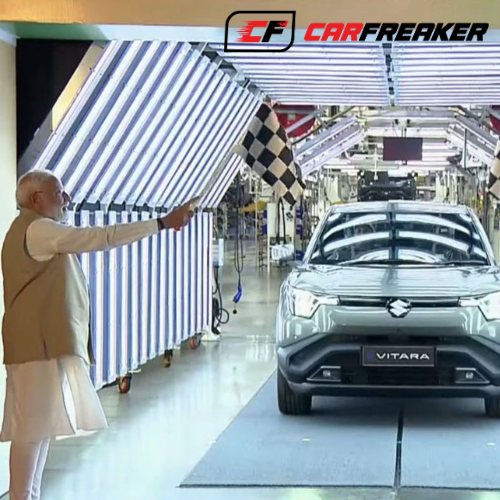
PM Modi Flags Off Maruti Suzuki’s Electric Car, Inaugurates Battery Plant in Ahmedabad India’s electric vehicle (EV) journey just hit another milestone. Prime Minister Narendra Modi flagged off Maruti Suzuki’s much-awaited electric car while also inaugurating the company’s state-of-the-art battery manufacturing plant in Ahmedabad, Gujarat. This landmark move promises to accelerate the shift toward sustainable mobility in India and marks a major step forward in the country’s green energy ambitions. Maruti Suzuki’s Electric Car Enters the EV Market For decades, Maruti Suzuki has been India’s most trusted carmaker. Known for producing reliable, affordable, and fuel-efficient vehicles, the brand has become a household name. With the launch of its first electric car, the company signals a new era of innovation and commitment to sustainability. This move is not just about launching a new car—it’s about reshaping how India thinks about mobility. By entering the EV space, Maruti Suzuki is making a bold statement: clean energy vehicles are no longer a niche product for the elite, but a practical solution for everyday Indians. Why Ahmedabad for the Battery Plant? Maruti Suzuki’s new plant in Hansalpur, Ahmedabad isn’t just about manufacturing batteries—it’s about building an ecosystem that supports the entire EV value chain. The choice of location is strategic and reflects a long-term vision. Key Reasons: The Hansalpur plant is expected to create thousands of jobs, both directly and indirectly. From engineers and technicians to logistics and support staff, the ripple effect on employment will be significant. Moreover, the plant will help reduce India’s dependence on imported batteries, boosting self-reliance under the Make in India initiative. PM Modi’s Push for Electric Mobility Prime Minister Narendra Modi has consistently emphasized the importance of electric mobility in India’s development strategy. During the inauguration, he stated that “India must lead the global EV revolution.” His government has rolled out several schemes to support this vision: These initiatives are aligned with India’s Net Zero 2070 climate goals. By promoting EVs, the government aims to reduce carbon emissions, improve air quality, and decrease reliance on fossil fuels. Benefits of Maruti Suzuki’s Electric Car for Indian Consumers 1. Affordability Maruti Suzuki has a long-standing reputation for making cars that are budget-friendly. Whether it’s the iconic Maruti 800 or the popular Alto, the brand has always catered to the middle class. The new electric car is expected to follow the same philosophy, making green mobility accessible to millions. 2. Low Running Costs Electric cars significantly reduce fuel expenses. With petrol prices constantly fluctuating, switching to an EV can lead to major savings over time. Maintenance costs are also lower since EVs have fewer moving parts compared to traditional internal combustion engine vehicles. 3. Sustainability EV adoption means reduced carbon emissions, cleaner air, and progress toward India’s green future. Every electric car on the road contributes to a healthier environment, especially in cities struggling with pollution. 4. Nationwide Service Network One of Maruti Suzuki’s biggest strengths is its extensive service network. With thousands of service centers across the country, maintaining an EV will be easier for early adopters. This is a major advantage over newer EV brands that are still building their support infrastructure. The Bigger Picture: India’s EV Market The Indian EV sector is expected to reach USD 113.99 billion by 2029. With Maruti Suzuki entering the field, the competition with Tata Motors, Mahindra, and MG Motor is set to heat up. This will likely lead to more innovation, better pricing, and improved features for consumers. EV Market Highlights: The entry of Maruti Suzuki into this space is expected to shake things up. With its brand trust, manufacturing scale, and customer reach, the company could become a dominant player in the EV segment. Challenges Ahead While the future looks bright, hurdles remain. Transitioning to electric mobility is a complex process that requires infrastructure, education, and policy support. Charging Infrastructure India still lacks adequate fast-charging stations. While metro cities are seeing some progress, rural and semi-urban areas need more investment. Without a reliable charging network, consumers may hesitate to switch to EVs. Battery Costs Despite local manufacturing, battery costs remain high. Lithium-ion batteries are expensive, and while prices are expected to drop over time, affordability remains a concern for many buyers. Consumer Awareness Many still hesitate to switch due to “range anxiety”—the fear that the car will run out of charge before reaching a destination. Educating consumers about EV capabilities, charging options, and maintenance is crucial for widespread adoption. E20 Fuel Rollout and Its Impact Another key factor for bike buyers in 2025 is the upcoming E20 fuel rollout in India. E20 fuel is a blend of 20% ethanol and 80% petrol. It’s part of the government’s plan to reduce carbon emissions and promote biofuels. The KTM Duke 160 (2025) will also run on ethanol-blended petrol. While this is a step toward sustainability, it’s important to understand how E20 fuel could impact mileage and long-term performance. Ethanol burns cleaner but can affect engine efficiency if not optimized properly. You can read our detailed blog on the Supreme Court verdict on E20 fuel to know the full picture. It covers everything from environmental impact to technical challenges and consumer rights. For instant updates on the latest bike launches, fuel policies, and automotive news, you can follow us on Instagram and LinkedIn. We share quick insights, exclusive images, and breaking stories so you never miss an update. Stay connected with us for all things auto! Another key factor for bike buyers in 2025 is the upcoming E20 fuel rollout in India. Since the KTM Duke 160 (2025) will also run on ethanol-blended petrol, it’s important to understand how E20 fuel could impact mileage and long-term performance. You can read our detailed blog on the Supreme Court verdict on E20 fuel to know the full picture. Conclusion: A Turning Point for Indian Mobility PM Modi’s inauguration of Maruti Suzuki’s first electric car and battery plant in Ahmedabad is more than just a corporate milestone—it’s a signal that India is ready to lead in the global EV revolution.